
Whitmer’s Big Tech Data Center Push Could Drive Up Michigan Electric Bills
LANSING, Mich. Governor Gretchen Whitmer’s Big Tech data center push could drive up Michigan electric bills as massive, energy-hungry facilities place new demands on the power grid and leave residents questioning who will pay for the upgrades.
Whitmer’s aggressive effort to bring hyperscale data centers to Michigan is sparking backlash from voters across the political spectrum. Critics warn the projects could strain the state’s power system, increase water use and raise residential electric rates by as much as 10%.
The controversy is also creating political problems for Whitmer. Her refusal to support a moratorium, combined with a high-profile appearance alongside OpenAI CEO Sam Altman, has angered some Democrats and raised questions about the effect on any possible 2028 presidential campaign.
Across Michigan, rural communities are fighting against the construction of hyperscale data centers, massive warehouse-sized facilities built to power the rapidly growing artificial intelligence industry.
These centers require enormous amounts of electricity and water to operate and cool their servers. Critics say the Whitmer administration has rolled out the red carpet for companies such as Oracle and OpenAI while leaving Michigan utility customers exposed to the cost of new power plants, transmission lines and other grid upgrades.
According to a Carnegie Mellon University analysis, electricity bills nationwide could increase by 8% by 2030 due solely to data center demand.
In Michigan, energy consultant Douglas Jester warned that a single 1-gigawatt data center could increase residential electric rates by 5% to 10% if proper ratepayer protections are not put in place.
Consumers Energy is currently considering 15 gigawatts worth of data center projects in its pipeline. Intervenors have estimated that even the most probable portion of that pipeline could trigger $8.1 billion in new generation costs.
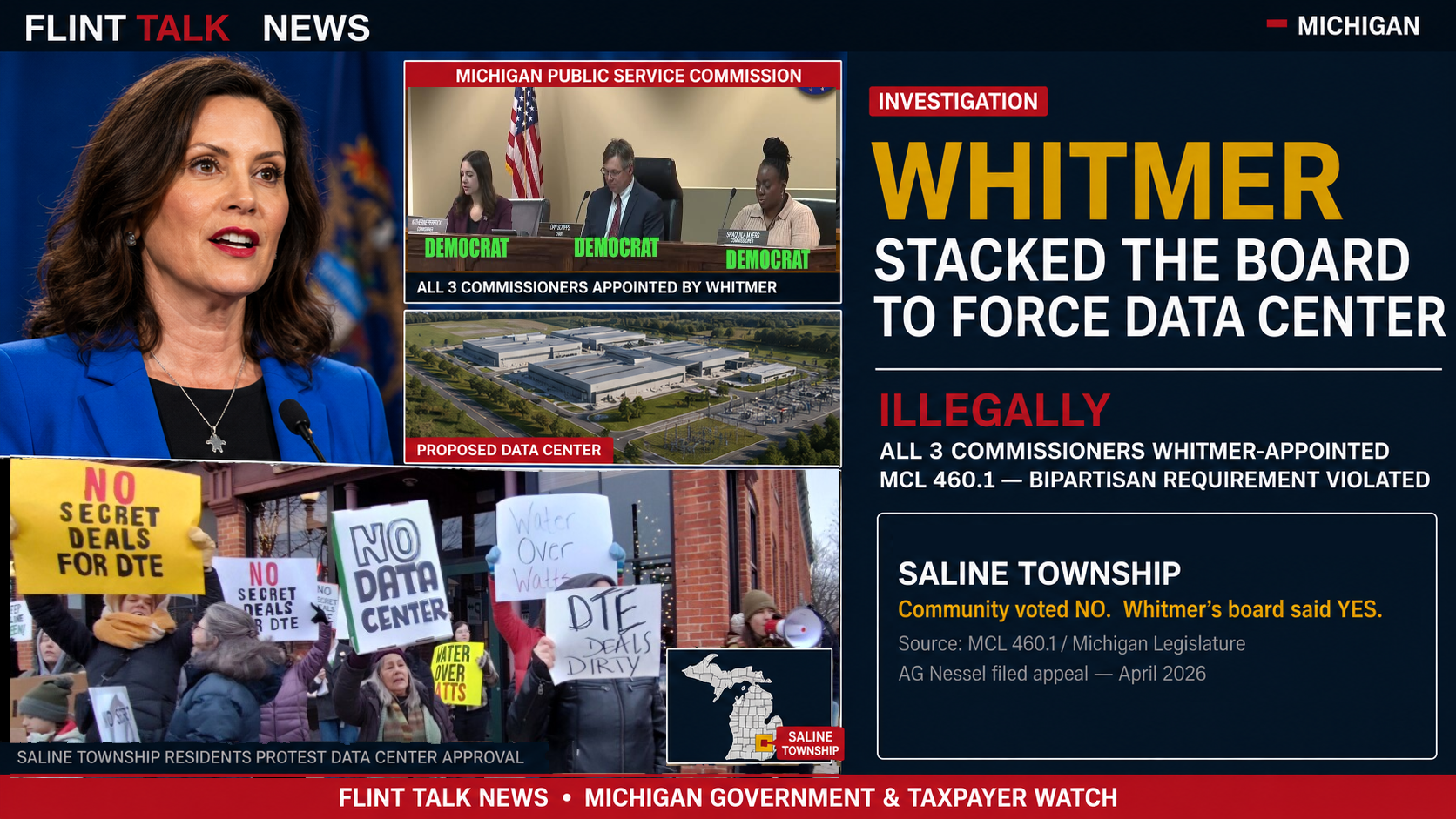
The political fallout intensified in June when Whitmer appeared on stage smiling alongside Altman at a groundbreaking ceremony for a controversial $16 billion data center in Saline Township.
The project had faced fierce local opposition, and the township treasurer resigned after receiving death threats connected to the dispute.
U.S. Rep. Rashida Tlaib, D-Detroit, publicly called Whitmer’s support for the project “disgusting.”
A lifelong Democratic voter who lives near the site told The Guardian, “I’m extremely angry watching her essentially throw us under the bus, casually.”
While governors in New York and Illinois have implemented moratoriums or paused tax incentives to study the effect of data centers on their power grids, Whitmer has refused to support a statewide moratorium in Michigan.
Political analyst and former lawmaker Bill Ballenger told Planet Detroit that the backlash, combined with Whitmer’s appearances alongside President Donald Trump, likely ended any presidential ambitions she may have had.
For Michigan voters, the math is simple: Big Tech gets the tax breaks, politicians get the photo opportunities and utility customers could get stuck with the bill.
Should Michigan families be forced to pay higher electric bills so the Whitmer administration can continue courting some of the world’s largest technology companies?
Sources: Planet Detroit, The Guardian, Michigan Advance, Carnegie Mellon University




Comments ()