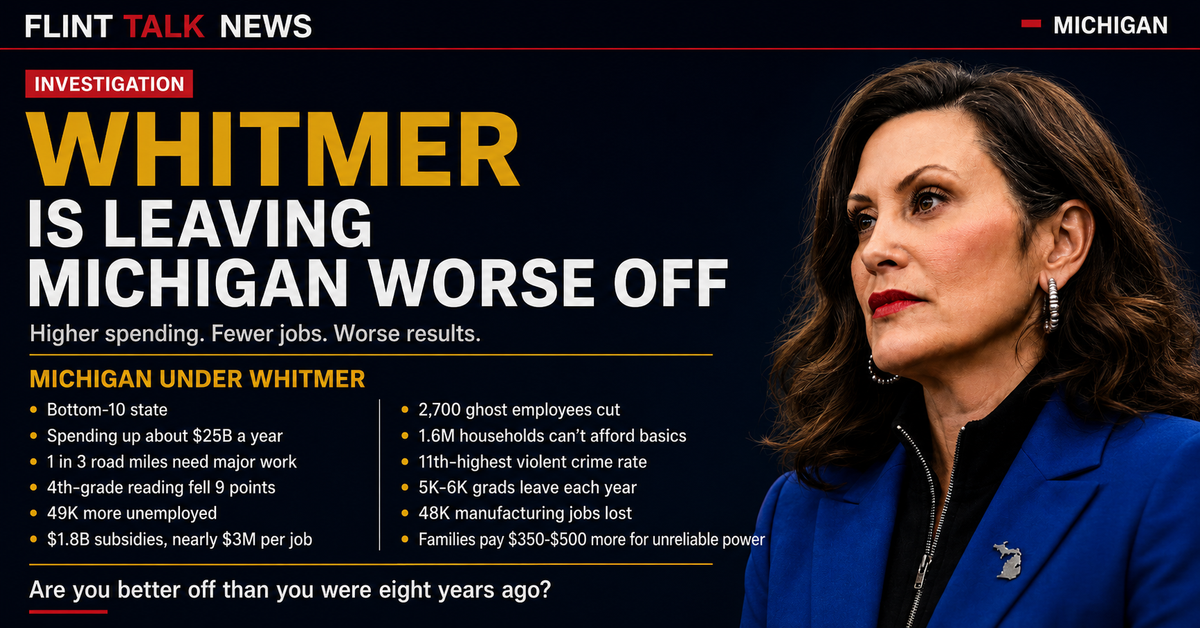
Whitmer Will Leave Michigan Worse Off Than She Found It
LANSING, Mich. Governor Gretchen Whitmer will leave office with Michigan spending roughly $25 billion more per year while residents face fewer jobs, declining schools, deteriorating roads, rising crime and higher energy bills.
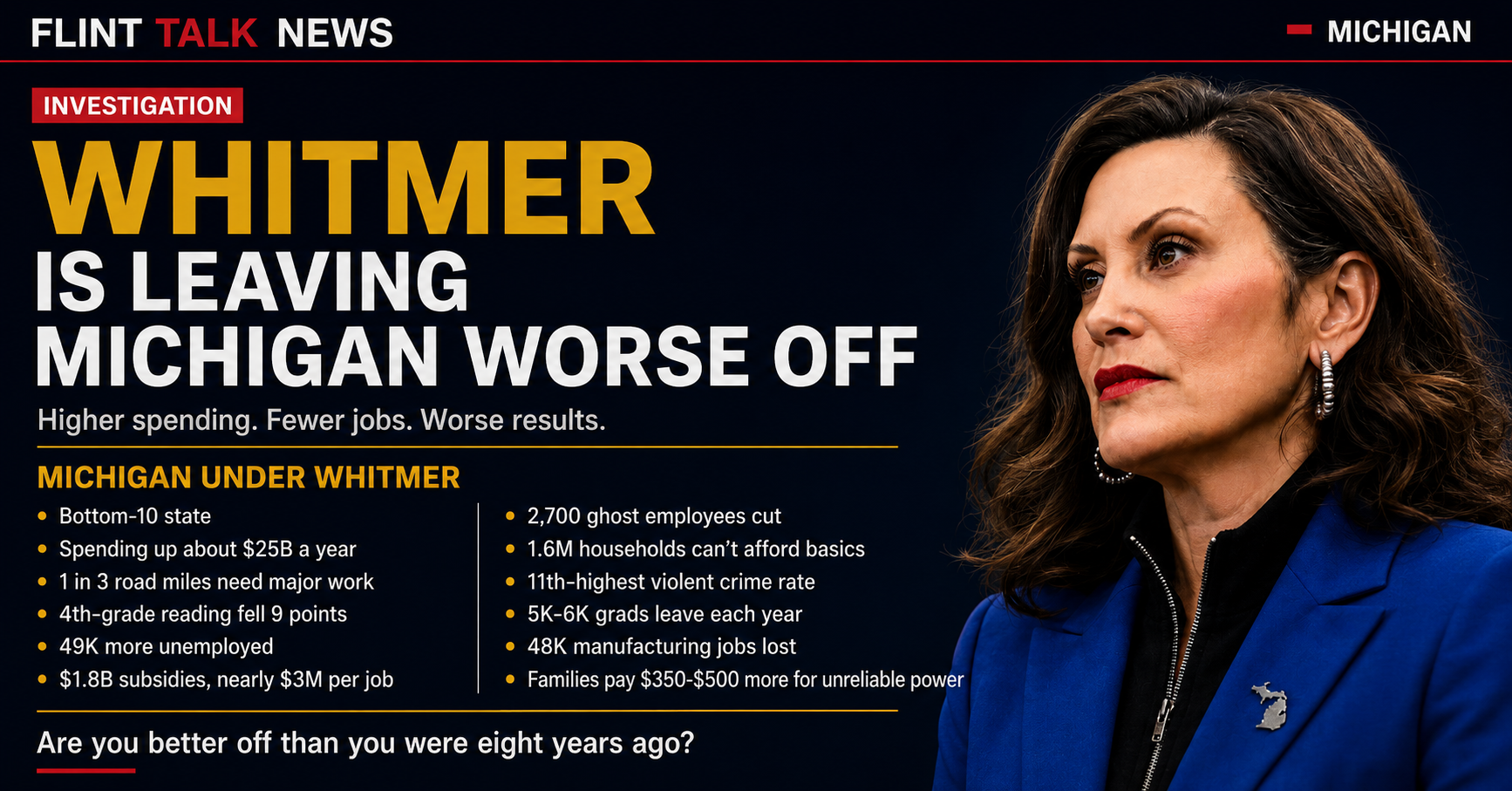
Michigan Under Whitmer
• Michigan ranks among the bottom 10 states
• State spending increased roughly $25 billion per year
• One in three road miles needs major work
• 4th-grade reading levels fell 9 points despite 25% more funding per student
• Michigan has 49,000 more unemployed residents
• Taxpayers spent $1.8 billion in corporate subsidies, nearly $3 million per job
• Over 2,700 vacant “ghost employee” positions were cut from the 2026 budget
• Nearly 1.6 million households cannot afford basic necessities
• Michigan’s violent crime rate ranks 11th and is 21% above the national average
• Michigan loses 5,000 to 6,000 college graduates annually
• Michigan lost roughly 48,000 manufacturing jobs
• Families pay $350 to $500 more annually for unreliable electricity
When Whitmer took office in January 2019, Michigan’s annual state budget was approximately $56.8 billion. The latest budget totals more than $81 billion, an increase of roughly $25 billion per year.
Whitmer campaigned on a promise to “fix the damn roads.” Nearly eight years later, one in three Michigan road miles still needs major work.
Michigan schools are receiving more taxpayer money while students fall further behind. Fourth-grade reading levels dropped nine points despite a 25% increase in per-student funding.
Michigan also has approximately 49,000 more unemployed residents and roughly 48,000 fewer manufacturing jobs than when Whitmer took office.
Her corporate subsidy programs have cost taxpayers $1.8 billion while producing only a fraction of the jobs promised. That equals nearly $3 million for every job created. A supertanker full of crude oil is worth about $350 million. Michigan spent more than the value of five of them on these subsidies.
State government became so bloated that over 2,700 vacant positions, known as “ghost employees,” were cut from the 2026 budget. Taxpayers were funding jobs that nobody held.
Nearly 1.6 million Michigan households, about 40% of the state, cannot consistently afford housing, food, transportation, health care and other basic necessities.
Michigan now has the nation’s 11th-highest violent crime rate, 21% above the national average.
The state also loses between 5,000 and 6,000 college graduates every year, taking their education, skills and future earnings elsewhere.
Michigan families are paying between $350 and $500 more each year for electricity while continuing to deal with unreliable service and repeated outages.
Whitmer’s answer during the final years of her administration was to spend even more.
Ronald Reagan once asked voters, “Are you better off than you were four years ago?” Michigan voters should now ask: Are you better off than you were eight years ago, or did Whitmer simply empty the checkbook before leaving office?


Comments ()