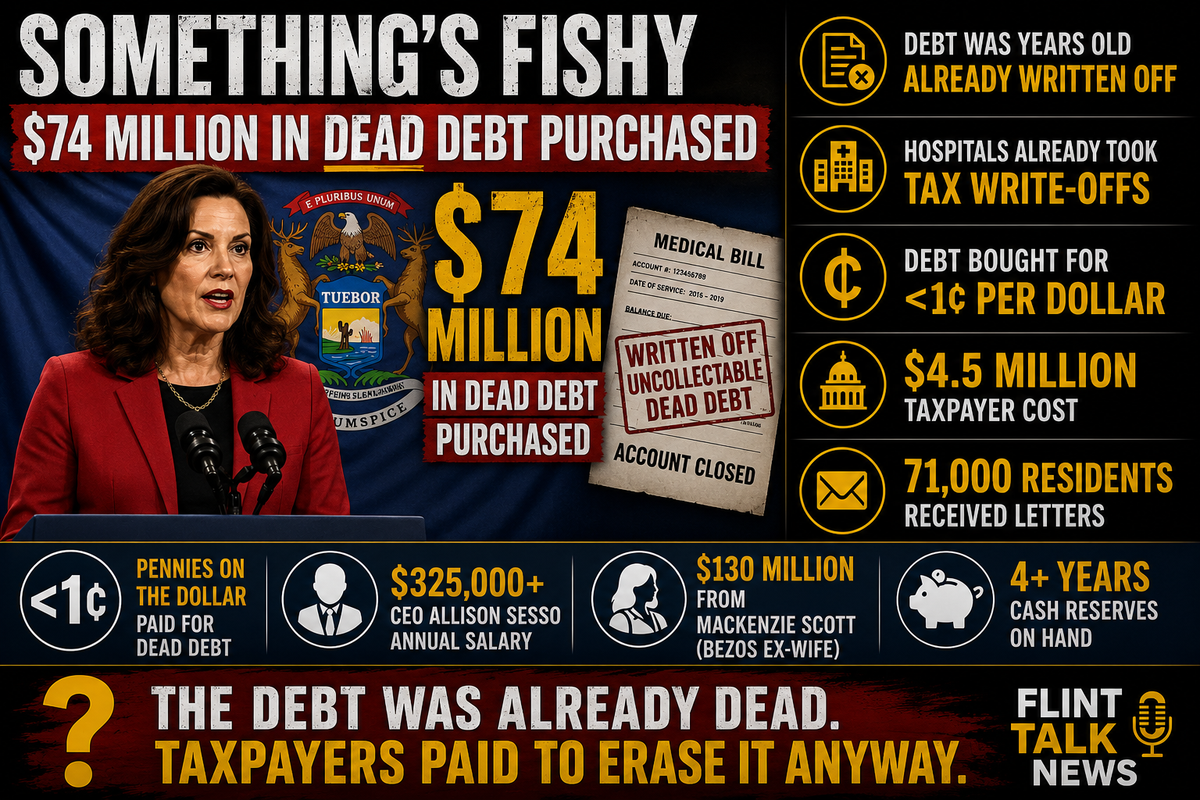
WHITMER TOUTS $74 MILLION IN MEDICAL DEBT RELIEF. CRITICS SAY THE DEBT WAS ALREADY WORTHLESS.
LANSING, Mich. - Governor Gretchen Whitmer announced that $74 million in medical debt has been erased for 71,000 Michigan residents, but critics say the debt was already written off by hospitals, considered largely uncollectable, and purchased for less than a penny on the dollar using $4.5 million in taxpayer funding.
The debt was purchased through Undue Medical Debt, a nonprofit that buys old medical debt portfolios from hospitals and health systems at steep discounts before notifying patients that their balances have been canceled.
Critics argue the program creates the appearance of massive debt relief while purchasing debt that hospitals had already classified as bad debt or charity care. They note that hospitals often receive tax benefits after writing off such accounts and that many collection agencies view the debt as having little remaining market value.
Michigan lawmakers approved $4.5 million for the program in the FY2024 budget. State officials say the funding has helped eliminate more than $218 million in medical debt affecting hundreds of thousands of Michigan residents.
According to public financial filings, Undue Medical Debt purchases qualifying debt for fractions of a penny on the dollar. Similar programs in other states have canceled hundreds of millions of dollars in debt for relatively small expenditures because of the low market value of the accounts being acquired.
The nonprofit, formerly known as RIP Medical Debt, has also drawn scrutiny over its finances. IRS filings show multiple executives earning six-figure salaries, including CEO Allison Sesso, who earned more than $325,000 annually. CharityWatch has reported the organization maintains substantial cash reserves, and filings show nearly $99,000 in consulting payments to a firm owned by a relative of the board chairman.
The organization has also received approximately $130 million in donations from billionaire philanthropist MacKenzie Scott through multiple gifts over several years.
Supporters say eliminating medical debt provides real relief to families regardless of the debt's market value. Critics counter that Michigan taxpayers spent millions of dollars to purchase debt that had already been written off and was unlikely to ever be repaid.
Did Michigan taxpayers receive meaningful relief for struggling families, or did the state spend $4.5 million to buy debt that was already effectively worthless?




Comments ()