

Under Whitmer, Michigan's SNAP Crisis: Rising Error Rates, $14 Million in Fraud, and a Looming Federal Penalty
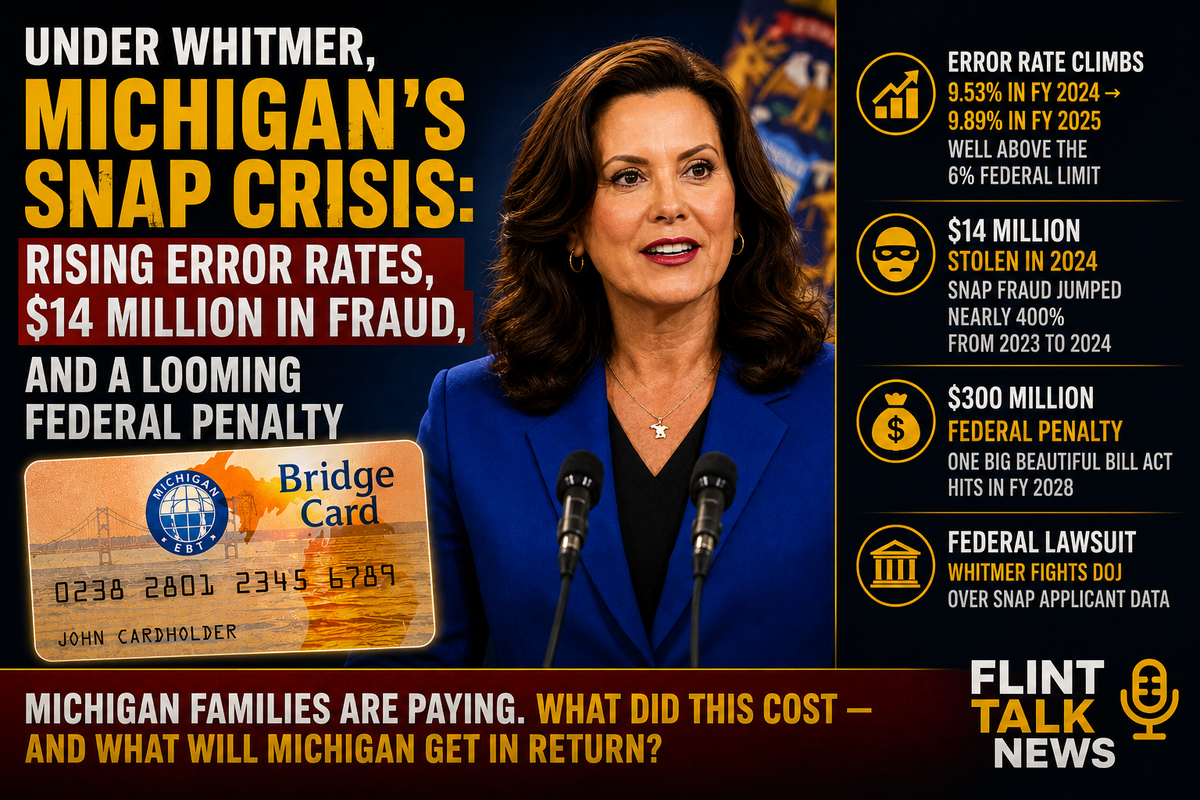
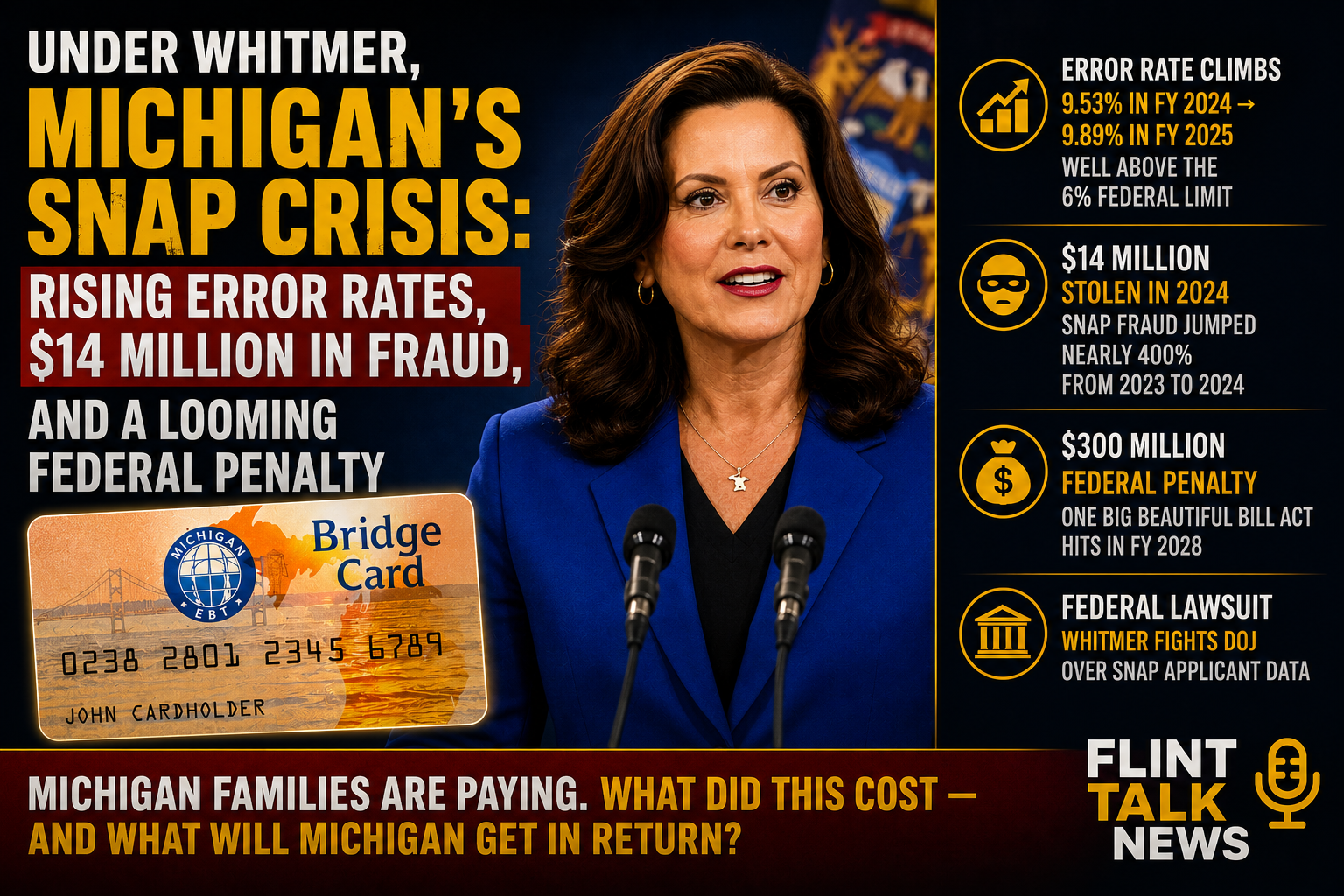
LANSING, Mich. Under Governor Gretchen Whitmer, Michigan's SNAP program is under increasing scrutiny as the state's payment error rate continues to rise, $14 million in food assistance benefits were stolen by criminals in 2024, and Michigan faces a $300 million federal penalty under new federal law if the state's payment error rate is not reduced.
The U.S. Department of Agriculture reported Michigan's SNAP payment error rate increased from 9.53% in fiscal year 2024 to 9.89% in fiscal year 2025. The payment error rate measures whether the correct amount of benefits was issued and includes both overpayments and underpayments.
Beginning in fiscal year 2028, the federal One Big Beautiful Bill Act requires states with SNAP payment error rates above 6% to pay a share of SNAP benefit costs. Based on Michigan's current error rate, the state is projected to face a $300 million federal penalty unless the rate is reduced.
The state is spending $37.5 million to lower the error rate. According to state records, the plan includes:
- $12 million for information technology upgrades.
- $10 million for additional staff and overtime.
- $6 million for consulting services from McKinsey & Co.
- $5 million for a statewide advertising campaign.
- $4.5 million for prior-year reinvestment efforts.
While Michigan works to reduce payment errors, electronic theft has continued to affect SNAP recipients. Criminals stole approximately $14 million in food assistance benefits during 2024 by using skimming and card-cloning devices on Michigan's magnetic-stripe Bridge Cards. The Michigan Department of Health and Human Services issued more than 269,000 replacement Bridge Cards during the year, averaging 738 replacements every day.
State Rep. Jason Woolford, R-Howell, has sharply criticized the department's handling of the program, saying stronger identity verification is needed to prevent fraud and improper payments. He has introduced legislation requiring Bridge Cards to include secure chip technology, photographs, and signatures for adult cardholders.
Michigan has announced that chip-enabled Bridge Cards will begin rolling out on January 1.
At the same time, Michigan is fighting the federal government in court. The U.S. Department of Justice has sued Michigan, along with Kentucky, Minnesota, and Pennsylvania, after the states refused a U.S. Department of Agriculture request for five years of SNAP applicant data. Federal officials say the records are needed to identify fraud, waste, and improper payments.
Attorney General Dana Nessel argues the federal government is seeking personal information beyond what federal law allows and has asked the court to block the request.
The controversy comes during a leadership transition at the Michigan Department of Health and Human Services. Governor Whitmer recently announced MDHHS Director Elizabeth Hertel will leave her position, with Amy Epkey serving as acting director.
About 1.4 million Michiganders depend on SNAP benefits. In Flint and communities across Michigan, stolen benefits, rising payment errors, and the growing financial burden on taxpayers continue to fuel debate over how the program should be managed.
The Question: With Michigan's SNAP payment error rate nearing 10% and millions of dollars being spent to fix the system, is the Whitmer administration moving fast enough to restore confidence in the program?



Comments ()