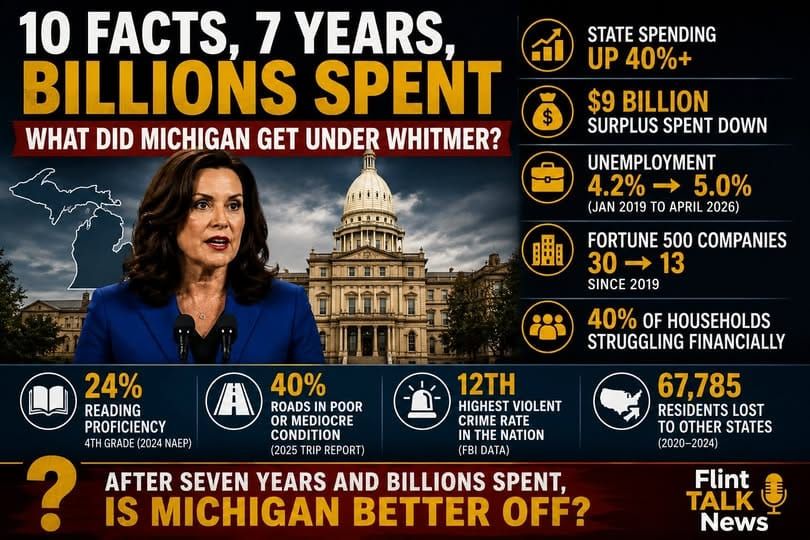
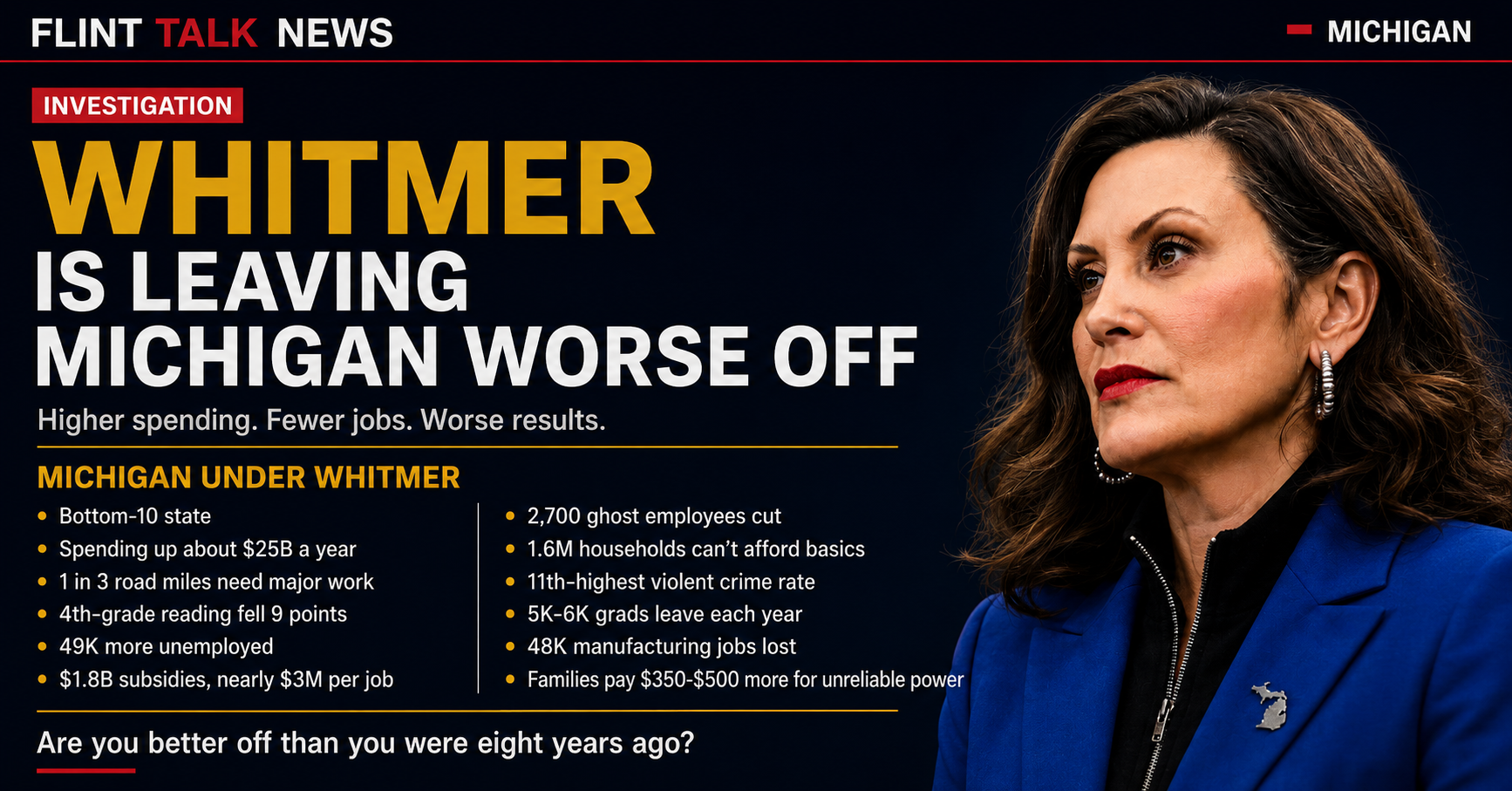
10 Facts, 7 Years, Billions Spent: What Did Michigan Get Under Whitmer?
LANSING, Mich. — Gov. Gretchen Whitmer took office in January 2019 promising to fix the roads, strengthen the economy, and improve opportunities for Michigan families. Seven years later, these ten facts provide a snapshot of where Michigan stands today.
- Unemployment
Michigan's unemployment rate was 4.2% when Whitmer took office. As of April 2026, it stands at 5.0%. - State Spending Increase
State government spending has increased by more than 40% since Whitmer took office, depending on the measure used. - $9 Billion Surplus Spent Down
Michigan once held a budget surplus of approximately $9 billion. That surplus has largely been spent. - Personal Income Ranking
Michigan ranks 40th in the nation for per capita personal income, placing the state 11th from the bottom among all 50 states. - Households Struggling Financially
According to the United Way ALICE Report, 40% of Michigan households are either in poverty or working but unable to afford basic living expenses. - Road Conditions
A 2025 TRIP report found that 40% of Michigan's major state and local roads remain in poor or mediocre condition despite years of increased road funding. - Reading Proficiency
Only 24% of Michigan fourth-grade students are proficient in reading, according to the 2024 National Assessment of Educational Progress. The national average is 31%. - Violent Crime
FBI data ranks Michigan 12th highest in the nation for violent crime, with a rate well above the national average. - Fortune 500 Companies
Michigan had 30 Fortune 500 companies when Whitmer took office. Today, that number stands at 13 publicly traded Michigan-based companies. - Small Business Closures
Michigan has seen tens of thousands of small businesses permanently close over the past several years amid pandemic restrictions, inflation, labor shortages, and rising operating costs. - Population Loss
Between 2020 and 2024, Michigan experienced a net domestic migration loss of 67,785 residents as more people moved to other states than moved into Michigan from elsewhere in the United States.
These numbers do not tell the entire story of a state, but they do measure outcomes. After seven years in office and billions of taxpayer dollars spent, Michigan voters will decide whether these results represent progress or disappointment. The question heading into 2026 is simple: what did Michigan get for the money?


Comments ()