

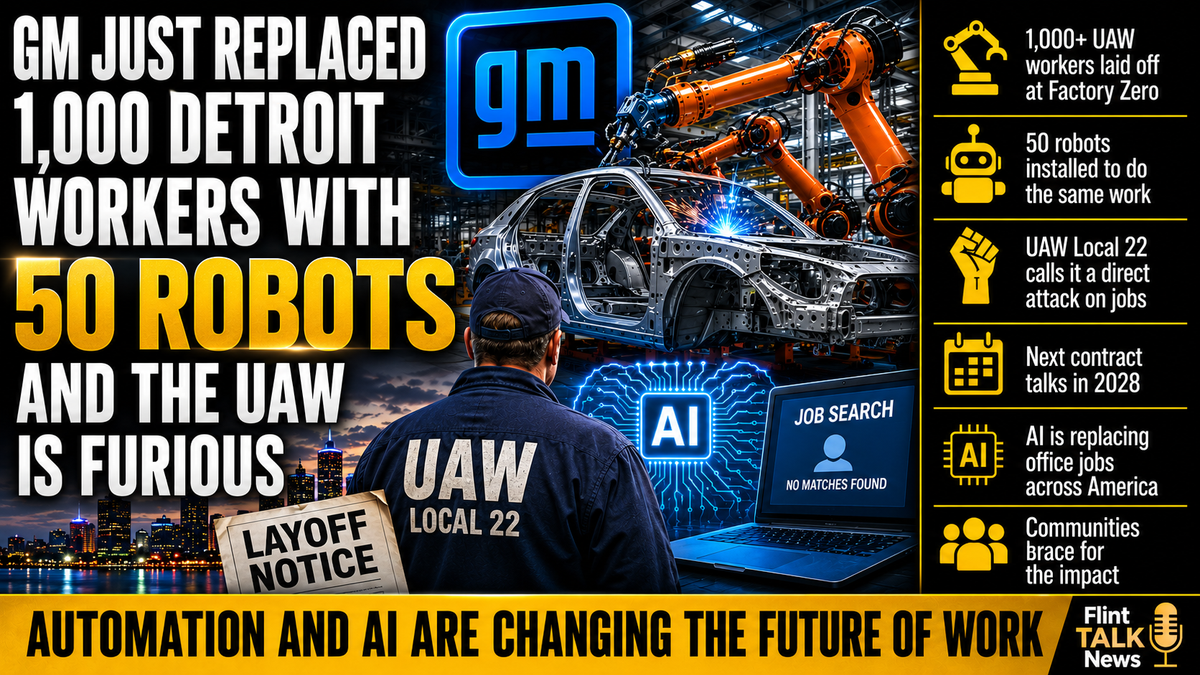
GM Replaces 1,000 Detroit Workers With 50 Robots as Automation Reshapes Michigan Manufacturing
DETROIT, Mich. General Motors has installed 50 collaborative robots, known as cobots, at its Factory Zero assembly plant while more than 1,000 UAW workers remain laid off, renewing concerns about how automation and artificial intelligence are changing the future of work. Union leaders say manufacturing jobs are disappearing, and many believe AI will accelerate that trend well beyond the factory floor.
The new robots work alongside employees, attaching body panels to electric vehicles as they move down the assembly line. GM says the technology improves safety, quality, and efficiency. Union leaders argue it also reduces the need for human workers.
UAW Local 22 President James Cotton criticized the move.
"It's always a concern when you see a robot coming to a plant, especially after they have laid off over a thousand people. They say it's the wave of the future, and if that's so, they're taking away jobs from people."
Cotton also said:
"Our manpower is being taken away from us. From top to bottom, we're disgusted that they have cobots in our plants."
The debate extends far beyond the auto industry. While robots are replacing some physical jobs on factory floors, artificial intelligence is beginning to automate office work, customer service, software development, accounting, legal research, marketing, and other jobs that once seemed untouchable. Instead of replacing muscle, AI is increasingly replacing knowledge-based work.
For Michigan, the issue is especially personal. Communities like Flint, Detroit, Saginaw, and Pontiac have already experienced decades of plant closures, outsourcing, and automation. Many workers worry the next wave will not only affect factory jobs but also the white-collar careers that have traditionally been viewed as more secure.
Supporters argue automation and AI help companies stay competitive, improve quality, and reduce workplace injuries. Critics counter that the technology is advancing faster than workers can retrain, leaving families and communities to absorb the economic impact while companies benefit from lower labor costs.
The question is no longer whether automation is coming. It is already here. The bigger question is whether businesses, workers, educators, and lawmakers can adapt quickly enough to ensure technology creates new opportunities instead of simply eliminating existing jobs.
The question: As AI and robotics continue replacing both factory and office jobs, what should companies and government do to protect American workers?





Comments ()