

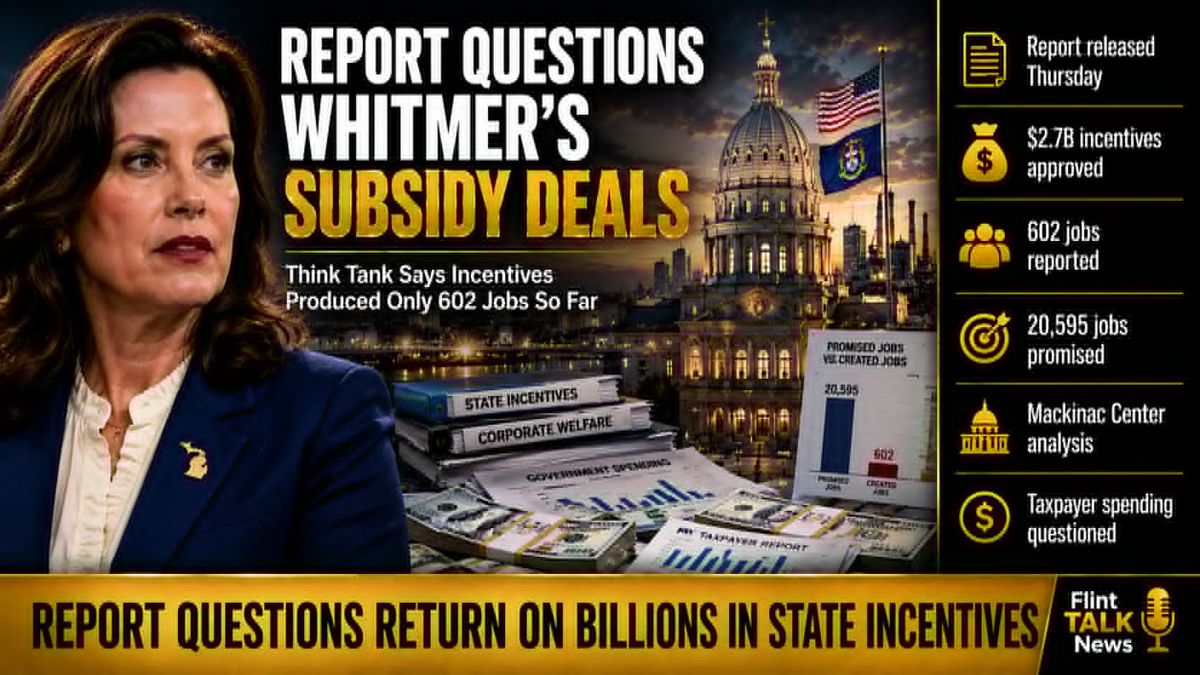
Whitmer's Major Business Incentive Deals Have Produced 602 Jobs After $1.8 Billion in State Spending
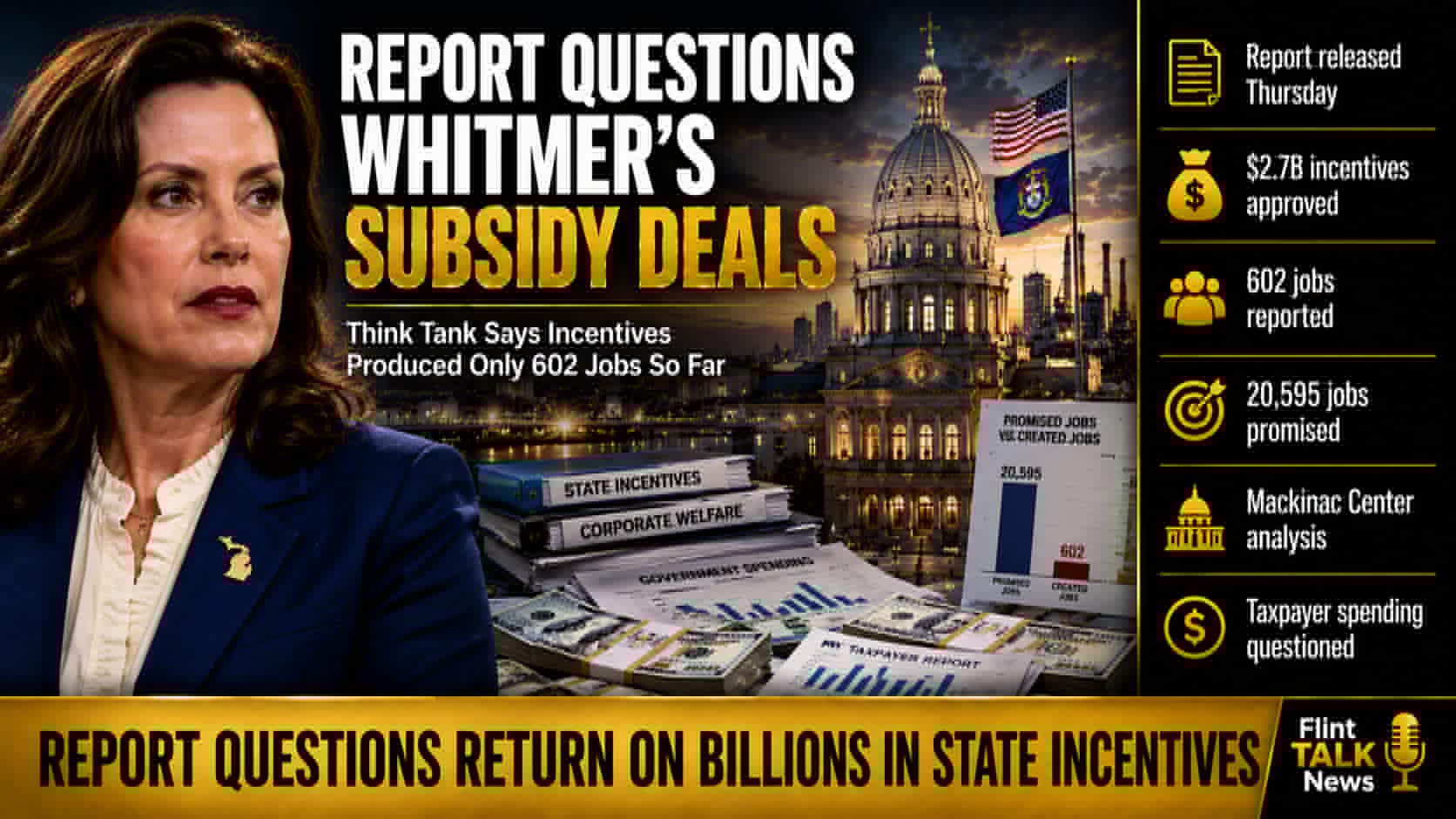
Governor Gretchen Whitmer's signature economic development strategy is facing new scrutiny after a report found that eight of her administration's largest business incentive deals have produced far fewer jobs than originally promised. According to a new analysis from the Mackinac Center for Public Policy, Michigan has spent approximately $1.8 billion on the projects so far, while the companies have created 602 jobs—about 3% of the 20,595 jobs originally projected.
The report, released by Mackinac Center fiscal policy director James Hohman, examined eight major incentive packages that Whitmer promoted as "generational" and "transformational" investments for Michigan's economy. Together, the projects were awarded $2.7 billion in taxpayer-funded incentives, representing less than half of the nearly $6.9 billion in business incentives approved since Whitmer took office in 2019.
Based on the report's figures, the $1.8 billion already distributed works out to nearly $3 million for every job currently created. The report argues that the projects have fallen well short of expectations, while supporters of the incentive programs have previously said many of the projects are long-term investments that will take years to reach full employment.
One of the first projects reviewed involved Fiat Chrysler, which received $109 million in state incentives and tax breaks in 2019 to modernize facilities in Detroit and Warren while creating 6,433 jobs. According to the report, the agreement was later canceled after the company failed to meet its job commitments, and those projected jobs were not included in the report's final job count.
Another major project involved General Motors and LG Energy Solution, which received a combined $666.1 million in incentives in 2022. The agreement called for the creation of 3,200 jobs through an electric vehicle assembly plant in Lake Orion and a battery plant near Lansing. Since then, GM has changed plans for the Lake Orion facility, while the Lansing battery plant has reported 408 employees. The report notes that the state has already distributed the full incentive package.
The report also reviewed two separate Ford incentive agreements. One $100.8 million project announced in 2022 was canceled after state officials concluded the company would not meet its job commitments. A second agreement, tied to Ford's electric vehicle battery plant in Marshall, originally promised 2,500 jobs before the company later reduced that estimate to 1,700. The state's incentive package was also reduced, although hundreds of millions of dollars have already been spent preparing the site.
Another project highlighted in the report involved Gotion, which planned to build a battery component manufacturing facility near Big Rapids. Whitmer described the project as a major investment in Northern Michigan, but strong local opposition led the state to cancel the incentive package before the company received its direct subsidy. A local development agency received funding for site preparation, and Attorney General Dana Nessel is continuing efforts to recover a portion of those taxpayer dollars.
The report also examined Our Next Energy (ONE), which received a $200 million incentive package to build a battery manufacturing facility expected to create 2,112 jobs. According to the report, the company has created 48 jobs so far and has shifted its business strategy while attempting to lease part of its facility.
Other projects reviewed included incentive agreements with Billerud, which canceled plans to upgrade its Escanaba paper mill, and a $250 million site preparation project in Mundy Township that was intended to attract a major semiconductor investment. According to the report, the site remains undeveloped after Sandisk chose another location.
The Mackinac Center concluded that Michigan lawmakers should be cautious about approving large taxpayer-funded incentive packages for private companies, arguing the projects have not yet delivered the economic results originally promised. The Whitmer administration has consistently defended the state's economic development strategy, saying major manufacturing investments often require several years before construction is completed and hiring reaches projected levels.
Comments ()