

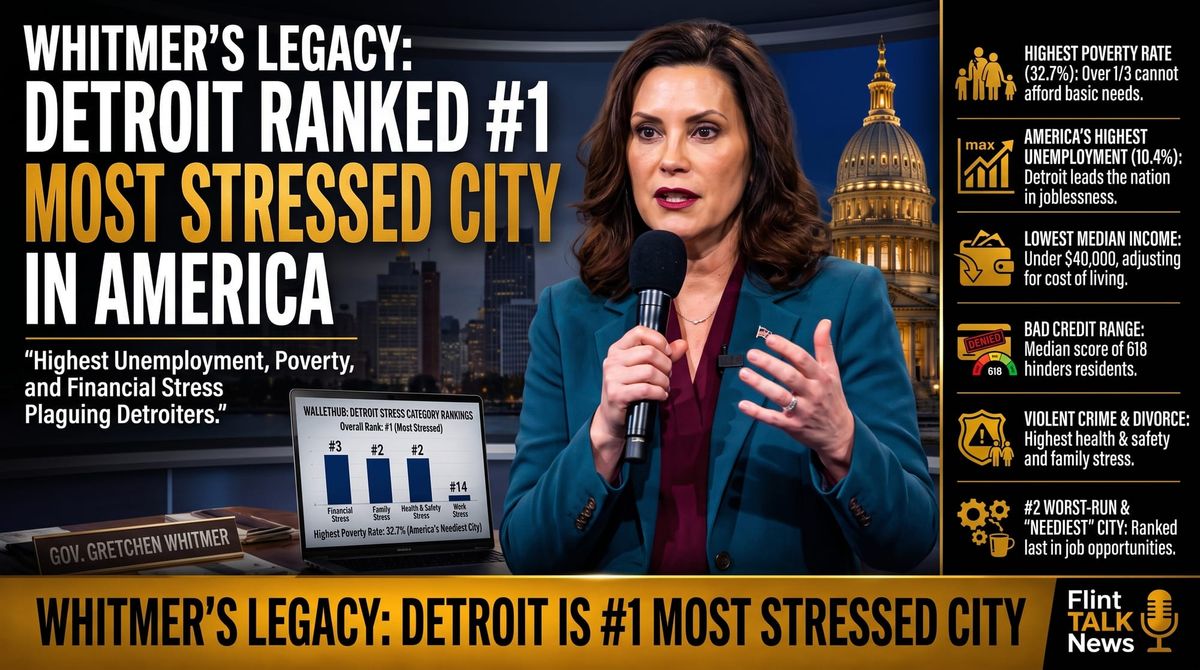
Detroit Ranked America's Most Stressed City as New Report Highlights Economic and Safety Challenges
A new national study has ranked Detroit as the most stressed city in America, citing high unemployment, poverty, financial hardship, family instability, and public safety concerns. The report, released by personal finance website WalletHub, compared more than 180 U.S. cities across 39 different metrics measuring work, financial, family, and health-related stress.
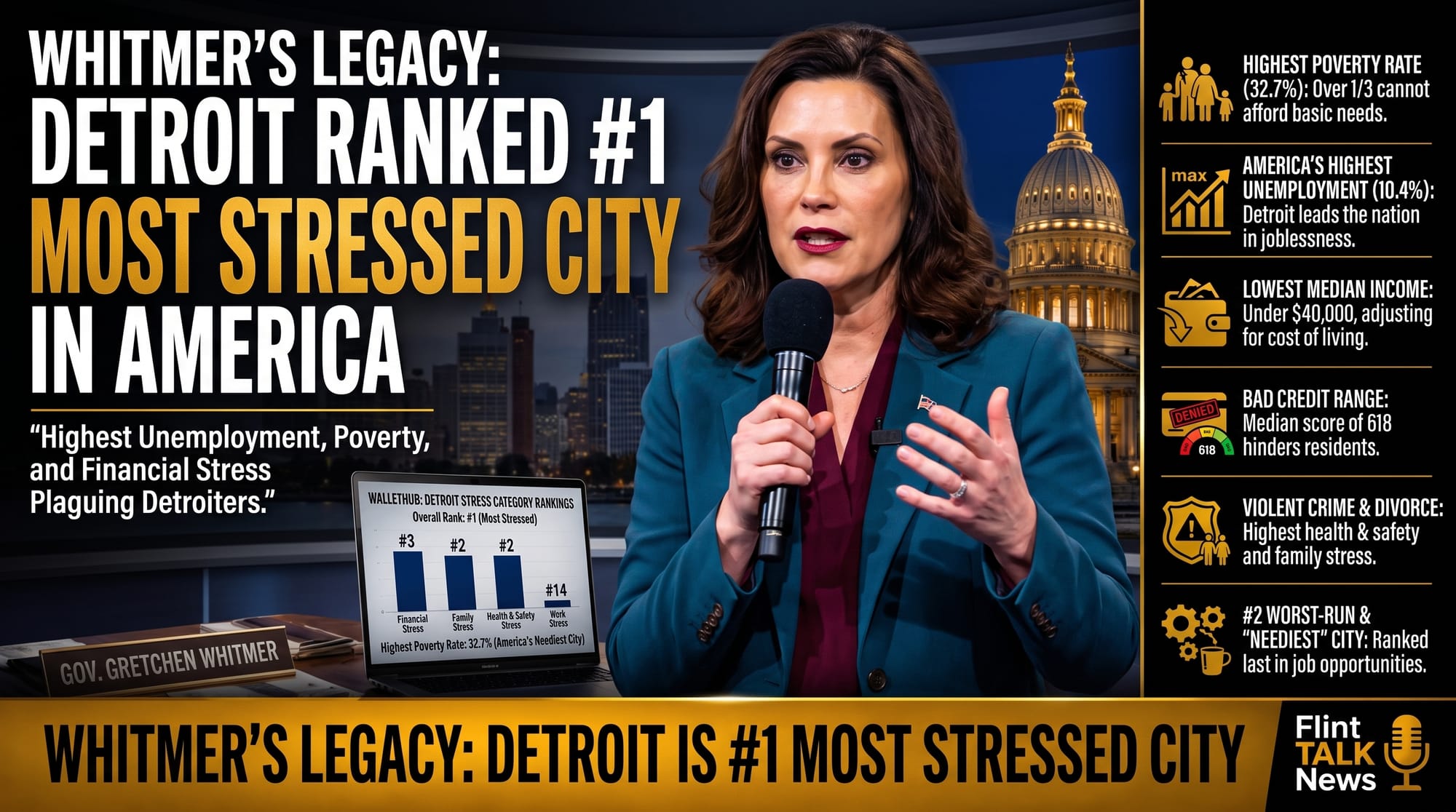
According to the study, Detroit ranked No. 1 overall after placing third for financial stress, second for family stress, and second for health and safety stress. The city's strongest category was work-related stress, where it ranked 14th nationally.
WalletHub said one of the biggest factors was Detroit's 10.4% unemployment rate, the highest among the cities included in the study. Researchers also pointed to the city's inflation-adjusted median household income of just under $40,000, the lowest in the nation, along with a 32.7% poverty rate, the highest among the cities analyzed.
The report also cited Detroit's low median credit score of 618, one of the nation's highest shares of single-parent households, one of the highest violent crime rates, a high obesity rate, and the lowest average amount of sleep among residents as factors contributing to overall stress levels.
Detroit was followed in the rankings by Baltimore, Cleveland, Memphis, Shreveport, Gulfport, Philadelphia, Jackson, Akron, and St. Louis. The least stressed city in America was Fremont, California, followed by South Burlington, Vermont, Bismarck, North Dakota, and several other cities in the Midwest and West.
Grand Rapids was the only other Michigan city included in the rankings. It finished 142nd overall, ranking significantly lower than Detroit in every major stress category.
The findings add to a series of recent national rankings involving Detroit. Earlier this year, other reports ranked the city among the nation's hardest places to find a job, one of the neediest cities, one of the worst cities for renters, and among the least caring cities in America. While each study used different methodologies, many highlighted ongoing economic and quality-of-life challenges facing Michigan's largest city.
The report also comes as broader economic challenges continue across Michigan. According to the United Way's ALICE (Asset Limited, Income Constrained, Employed) report, approximately 40% of Michigan households struggle to afford basic necessities such as housing, food, transportation, child care, and health care. That represents roughly 1.63 million households, an increase from about 38% when Governor Gretchen Whitmer took office in 2019.
Whitmer has frequently highlighted record job growth, business investment, infrastructure spending, and manufacturing expansion during her administration, while critics argue many Michigan families continue to face rising living costs and financial hardship despite those investments. Detroit's latest ranking is likely to add to the ongoing debate over the state's economic direction and quality of life.





Comments ()