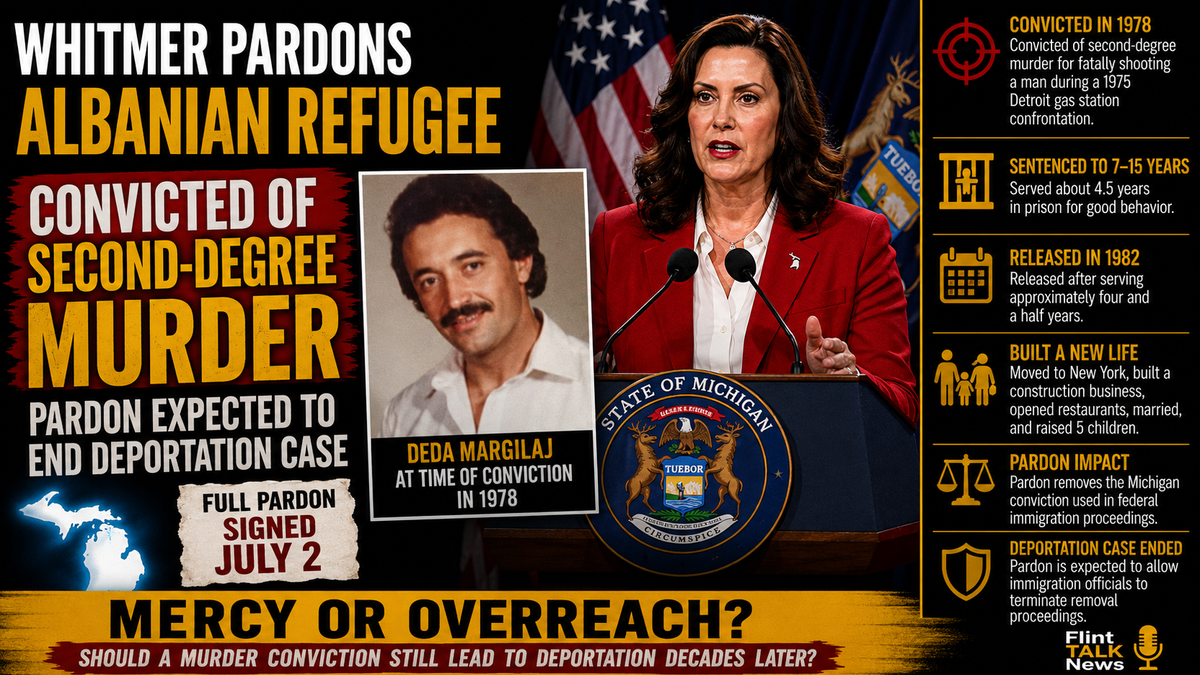
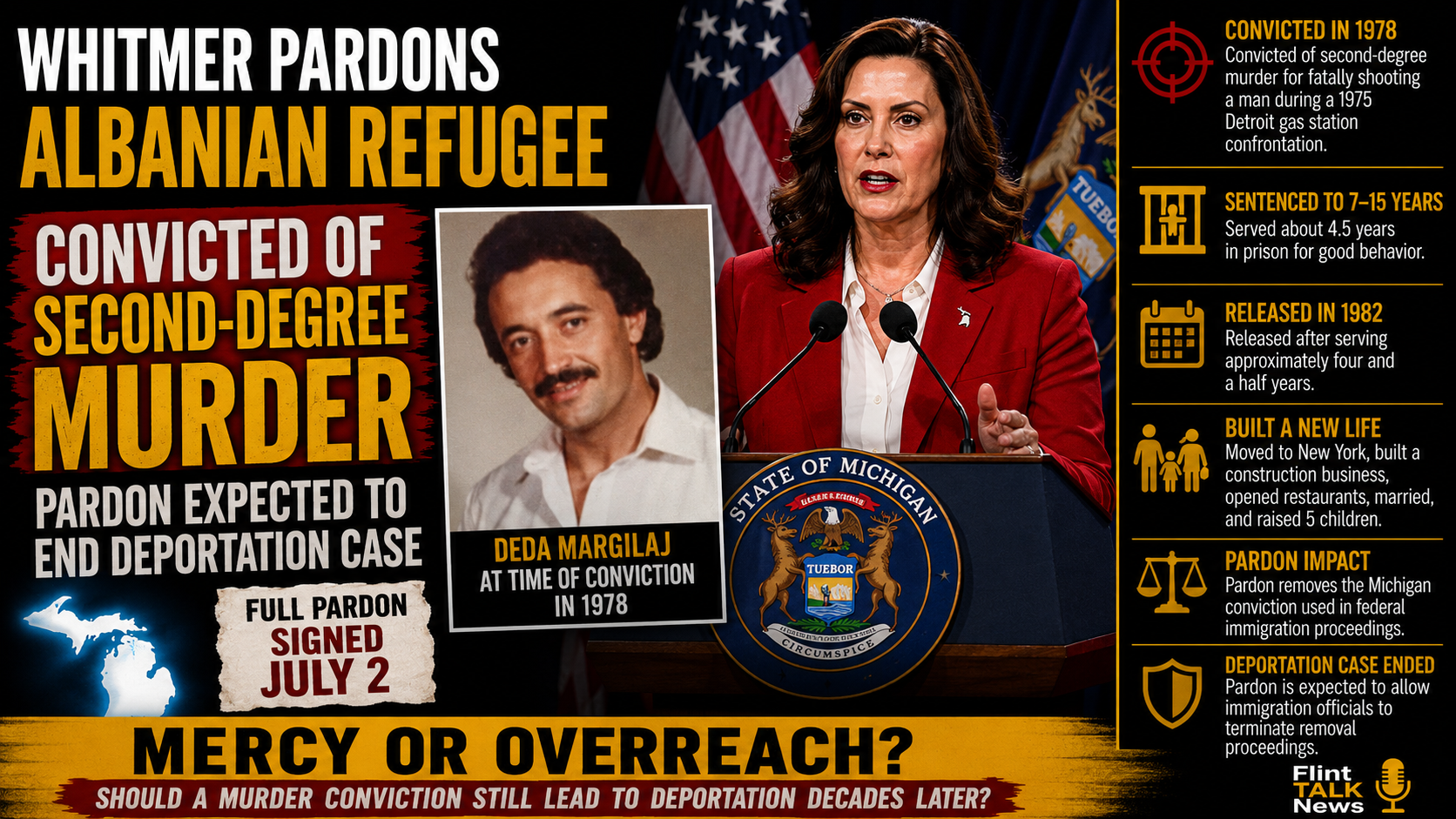
Whitmer Pardons Albanian Refugee Convicted of Murder, Likely Ending Deportation Case
Governor Gretchen Whitmer has granted a full pardon to an Albanian refugee who was convicted of second-degree murder in Michigan nearly 50 years ago, a decision that is expected to end deportation proceedings that have threatened to separate him from his family for decades. Whitmer signed the pardon for Deda Malota Margilaj, 74, on July 2, making him one of four people to receive pardons this month.
Margilaj was convicted of second-degree murder in 1978 for the fatal shooting of a man during a 1975 confrontation at a Detroit gas station. According to court records and his legal team, the shooting occurred after the victim shot Margilaj's brother. His first trial ended in a hung jury before a second jury convicted him. He was sentenced to seven to 15 years in prison but was released after serving approximately four and a half years because of good behavior.
Whitmer's pardon removes the Michigan conviction that served as the basis for federal immigration proceedings. According to the Perlmutter Center for Legal Justice, which represented Margilaj, the pardon allows immigration officials to terminate removal proceedings that began during the Biden administration because of his decades-old conviction.
After his release from prison in 1982, Margilaj moved to New York, where he built a construction business, later opened restaurants, married, and raised five children. His attorneys said changes to federal immigration law in 1996 left him at risk of deportation, causing him to avoid international travel for years out of concern he could be removed from the United States. They said he was unable to return to Albania to attend either of his parents' funerals because of that risk.
Before granting the pardon, Michigan's Parole Board held a public hearing in April, as required under state law. Margilaj's application included letters of support from family members, community leaders, friends, and law enforcement officials describing his life after prison and his contributions to the Albanian-American community in New York.
Margilaj said the United States gave him the opportunity to build a family and a career after arriving as a teenage refugee from Albania. He said Whitmer's decision allows him to remain with his family without the fear of deportation that he has lived with for many years.
Margilaj was one of four people pardoned by Whitmer on July 2. The governor also granted pardons to Jamor James, Mamil Lewis, and Amari Seals, while commuting the life sentences of Barbara Davis and Demel Dukes. Unlike a pardon, a commutation reduces or ends a prison sentence but does not erase the underlying conviction.
The decision also marks at least the second time Whitmer has used her pardon power in a case involving deportation. In 2025, she pardoned Lue Yang, a Hmong refugee who was facing deportation because of a decades-old conviction. Yang was later released from federal immigration custody after receiving bipartisan support from elected officials.
The Question: Do you think governors should use their pardon powers to help people facing deportation for decades-old convictions after they have completed their sentences?





Comments ()