Whitmer Blew Through a $9 Billion Surplus. Now Lansing Wants the Rainy Day Fund.
LANSING, Mich. While Michigan families have spent the last few years stretching paychecks, cutting back on groceries, and watching the cost of nearly everything rise, state government spending has moved in the opposite direction.
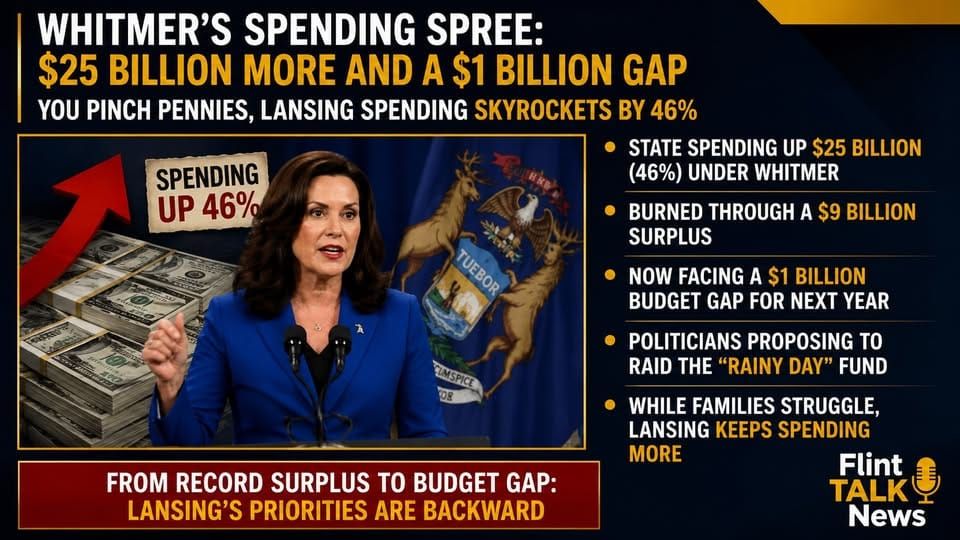
According to state budget figures, Michigan government spending has increased by roughly $25 billion, or 46%, under Governor Gretchen Whitmer's administration. During that same period, Lansing burned through a budget surplus that once exceeded $9 billion.
Now, with projections showing a potential $1 billion budget shortfall next year, lawmakers are discussing whether to tap Michigan's "rainy day" fund to help cover the gap.
Critics argue the situation raises a simple question: How do you go from a record surplus to a budget deficit after increasing spending by nearly half?
Supporters of the spending say much of the increase was driven by federal funding, infrastructure projects, education programs, and other state priorities. Opponents counter that government spending has grown far faster than many Michigan families can afford.
For taxpayers struggling with rising utility bills, insurance costs, property taxes, groceries, and housing expenses, the debate is likely to sound familiar. When families overspend, they have to tighten their belts. When government overspends, the solution often seems to be spending savings or looking for more revenue.
The bigger question for Michigan residents may be this:
If Lansing burned through a $9 billion surplus during good times, what happens when the economy hits a real downturn?





Comments ()