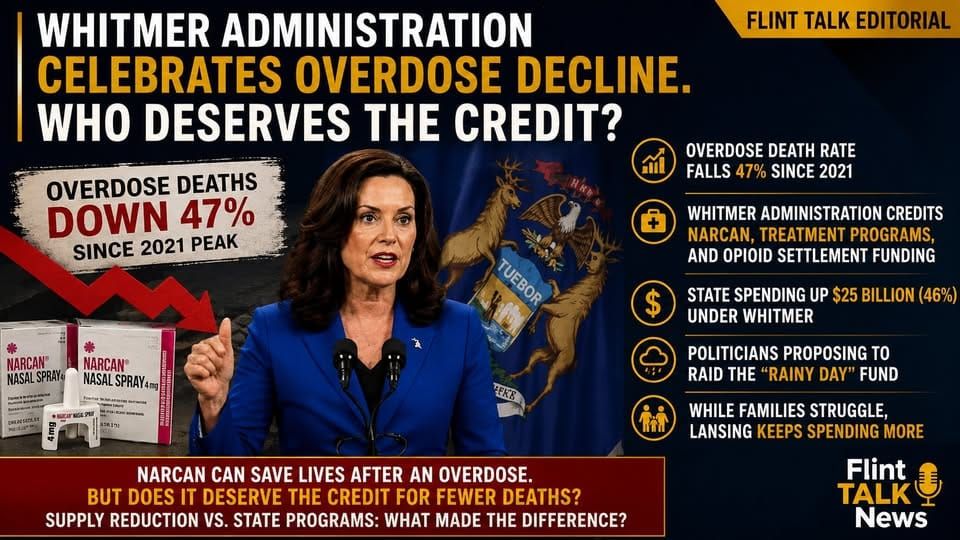
WHITMER ADMINISTRATION CELEBRATES OVERDOSE DECLINE. WHO DESERVES THE CREDIT?
FLINT TALK EDITORIAL
LANSING, Mich. — The Whitmer administration announced Tuesday that Michigan's overdose death rate has fallen 47% since its 2021 peak, dropping from 30.8 deaths per 100,000 residents to a projected 16.4 in 2025.
State officials credit Narcan distribution, treatment programs, harm-reduction efforts, and opioid settlement funding for the decline.
The numbers themselves are not in dispute. The question is what caused the decline.
National overdose deaths surged during the Biden administration, rising from approximately 91,000 deaths in 2020 to more than 107,000 in 2021 and reaching record levels in 2022. Michigan followed the same trend, recording more than 3,000 overdose deaths in 2021 alone.
Fentanyl became the driving force behind the overdose crisis, flooding communities across Michigan and the rest of the country. As overdose deaths climbed to record levels, families paid the price.
Now that overdose deaths are falling, the Whitmer administration is pointing to Narcan and state-funded programs as evidence that its approach is working.
But Narcan is used after an overdose has already occurred. It can save a life, but it does not stop fentanyl from crossing the border. It does not stop traffickers from moving drugs into communities. It does not stop dealers from selling fentanyl on the street.
Prevention starts before the overdose happens.
Supporters of stronger border enforcement and anti-trafficking efforts point to increased enforcement targeting drug trafficking organizations and efforts to disrupt the flow of fentanyl entering the United States. They argue that reducing the supply of fentanyl is the most effective way to reduce overdose deaths.
The Whitmer administration maintains that expanded treatment access, prevention programs, and Narcan distribution deserve much of the credit for the decline.
What is clear is that overdose deaths surged to record highs during the fentanyl crisis and have since fallen significantly.
Who deserves the credit remains a matter of debate.
Question: If Narcan treats the consequences of an overdose after it happens, what played the larger role in reducing overdose deaths: public health programs or efforts aimed at reducing the supply of fentanyl before it reaches the streets?

Comments ()