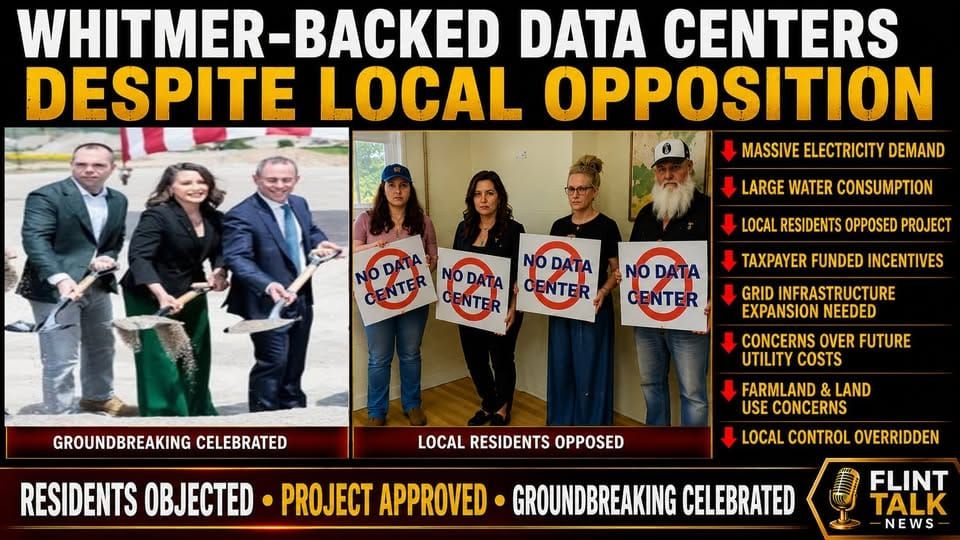
SALINE TOWNSHIP RESIDENTS FOUGHT IT WHITMER BACKED IT
FLINT TALK EDITORIAL
Governor Gretchen Whitmer stood beside OpenAI CEO Sam Altman and other executives to celebrate a sixteen billion dollar AI data center project in Saline Township. The problem is that many of the people who actually live there spent months trying to stop it.
Residents raised concerns about farmland, local control, water consumption, electricity demand, and the long term impact the project could have on their community. Yet despite those concerns, the project moved forward and state leaders showed up to celebrate it.
Supporters call it economic development. Many residents see it differently.
This facility is expected to consume roughly 1.4 gigawatts of electricity, an amount comparable to the power used by more than one million homes. It will also require significant infrastructure and water resources to operate. None of that comes free.
The electricity has to be generated. Transmission lines have to be expanded. Substations have to be upgraded. Water systems have to be able to support the demand. Every one of those improvements costs money, and many residents are asking the same question. Who ultimately pays?
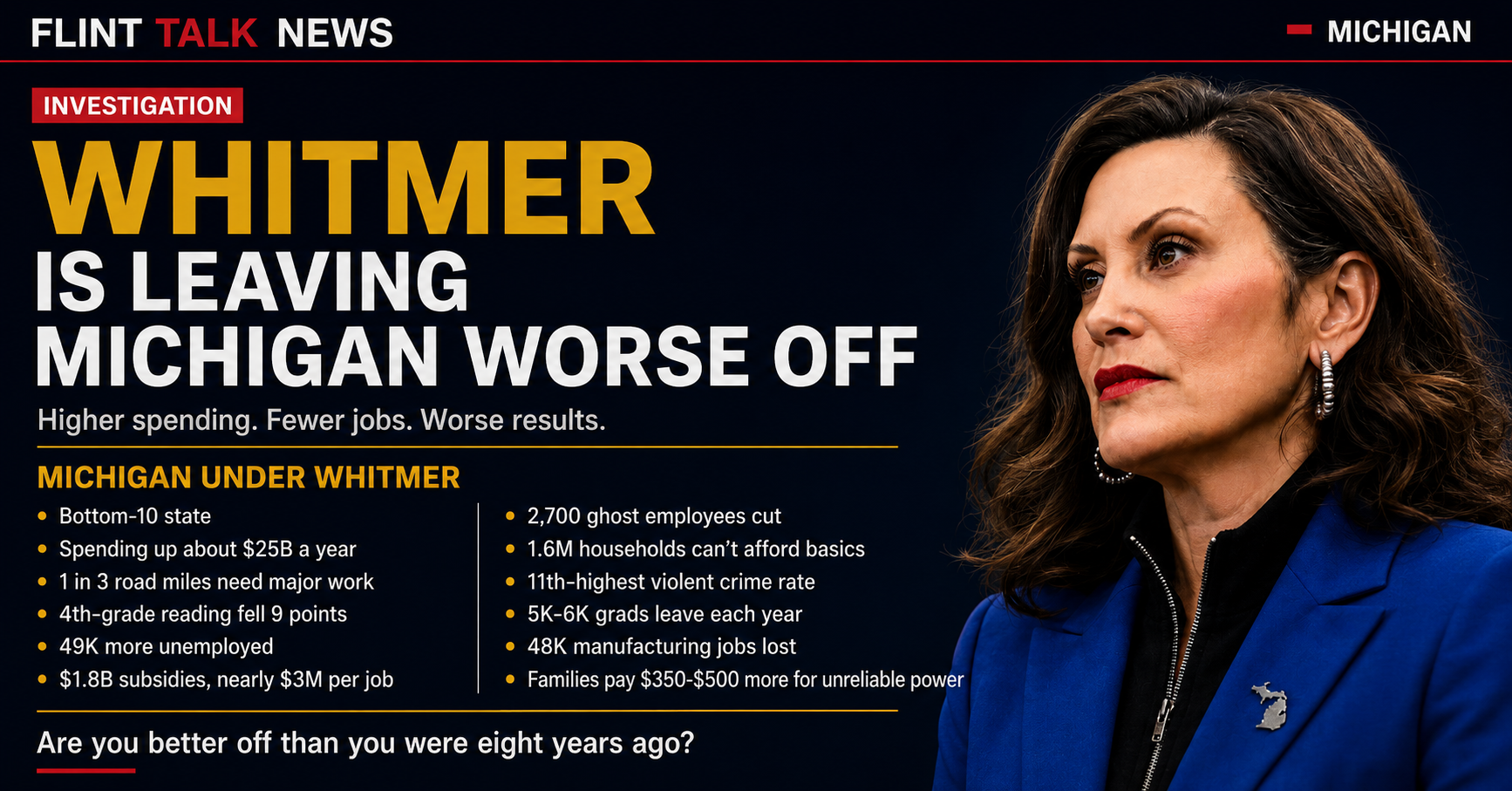
Michigan residents are already being asked to pay more. Electric rates have increased. Peak pricing has returned during the summer months. Insurance costs remain high. Housing costs continue to rise. Fuel tax increases are being debated. For many families, there is no room left in the budget for another increase.
Communities across America are already discovering that AI data centers do not just bring servers. They bring enormous demands for electricity, water, transmission lines, substations, and other infrastructure. Residents in other states are asking whether they will end up paying part of the bill through higher utility costs and increased strain on local resources.
Michigan is not the first state to face these concerns. Lawmakers in Maine have proposed restrictions on large data centers because of worries about electricity demand, grid reliability, and the impact on ratepayers. Across the country, communities are questioning whether the benefits justify the costs.
Electricity is only part of the story. Large data centers can consume millions of gallons of water per day. Communities around the country have already raised concerns about local water supplies, infrastructure demands, and whether taxpayers will be expected to support the expansion needed to accommodate these facilities.
Government officials are once again telling people not to worry. For many Americans, that message no longer carries the weight it once did. After years of government failures, cost overruns, fraud scandals, broken promises, and rising bills, many residents no longer believe it is their responsibility to prove why they should be concerned. They believe it is the government's responsibility to prove why they should not.
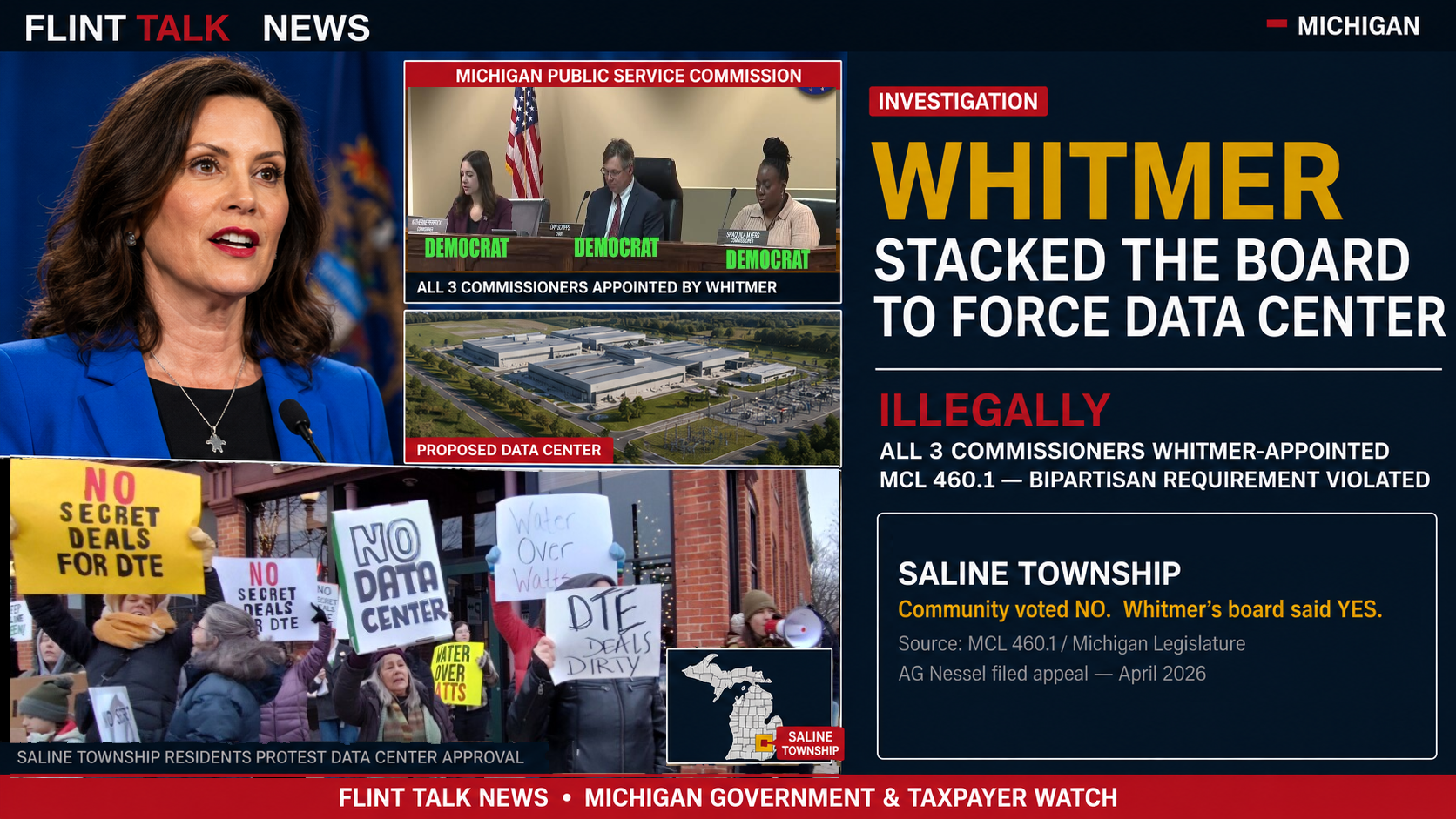
The people of Saline Township attended meetings, voiced their concerns, and tried to stop the project. In the end, one of the largest AI developments in the country moved forward anyway.
For many residents, that did not look like representation. It looked like local concerns taking a back seat to the interests of billion dollar corporations and powerful investors.
Years ago, a political candidate became famous for saying, "The rent is too damn high." Today, many Michigan residents might say everything is too damn high. Rent is too high. Groceries are too high. Insurance is too high. Electricity is too high. Taxes are too high.
That is why many residents are not celebrating. They are asking a simple question:
If projects like this are so good for the public, why do ordinary people always seem to end up paying more?

Comments ()