

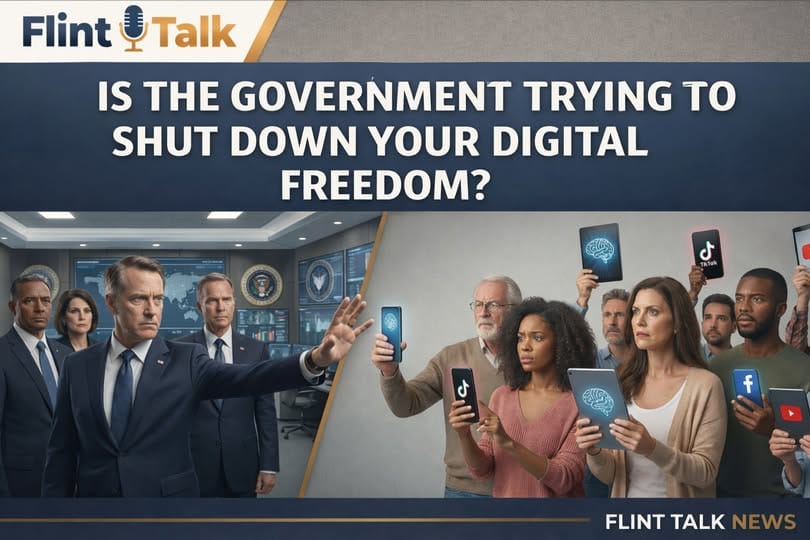
Is the Government Trying to Shut Down Your Digital Freedom
Flint, Michigan. For decades, most Americans received their news from a small number of sources. Evening television broadcasts, local newspapers, and a handful of major national outlets shaped the information people saw each day. Governments and large media organizations often acted as gatekeepers, determining which stories reached the public and how those stories were presented.
The rise of smartphones and artificial intelligence tools has changed that system. Nearly anyone with a mobile phone can record events, publish video, and share information instantly. Platforms such as YouTube and TikTok allow individuals to post footage or commentary before traditional news organizations have time to produce a report. AI tools also allow users to analyze documents, gather information, and distribute their own interpretations to a wide audience.
Supporters of this shift argue that it has expanded the flow of information. Instead of relying on a limited number of large outlets, people can now see many different perspectives on the same event and decide for themselves what they believe. The barrier to publishing information has dropped dramatically, giving ordinary citizens the ability to document events as they happen.
At the same time, governments and large technology companies have begun discussing new regulations aimed at controlling misinformation, artificial intelligence systems, and online content. Officials often argue that oversight is necessary to address false information, online manipulation, and potential security risks associated with rapidly developing technology.
Critics view those proposals differently. Some believe increased regulation could allow governments or powerful institutions to regain control over digital communication by limiting how information is shared online. Concerns have been raised about censorship, the regulation of AI tools, and the potential removal of online content that challenges official narratives.
The debate now centers on where the balance should be placed. Supporters of regulation argue that guardrails are necessary to protect the public from harmful misinformation. Opponents argue that too much control could restrict open communication and limit the ability of individuals to report and share information freely.
As smartphones and artificial intelligence continue to reshape how information spreads, the question facing the public remains clear. Will new rules protect the public from misinformation, or will they place new limits on the digital freedom that has allowed ordinary people to report what they see in real time?


Comments ()