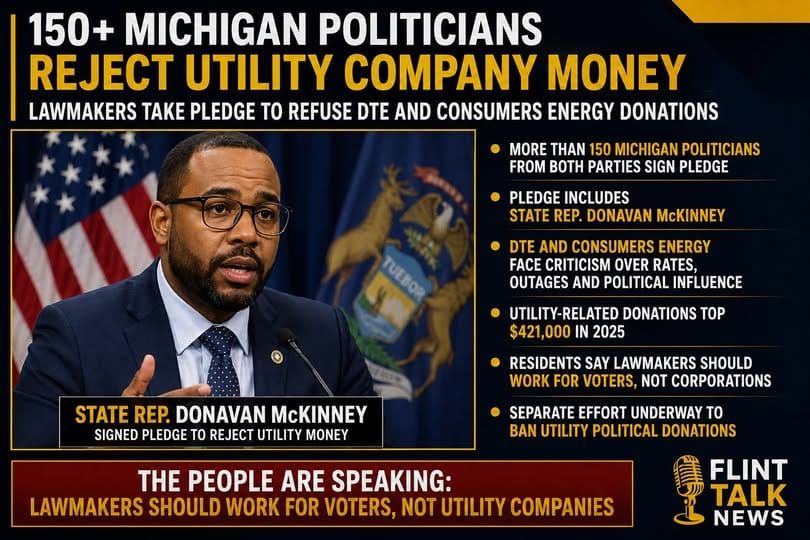
150+ Michigan Politicians Reject DTE and Consumers Energy Money
LANSING, Mich. – More than 150 Michigan politicians from both parties have pledged not to accept campaign contributions from DTE Energy and Consumers Energy, according to the Michigan League of Conservation Voters.
The growing movement reflects frustration from residents who believe elected officials should represent voters before corporations, especially when those corporations are regulated monopolies that provide essential services to millions of Michigan residents.
Among those taking the pledge is State Rep. Donavan McKinney, who has publicly supported efforts to reduce the influence of utility money in state politics.
The pledge comes as DTE and Consumers Energy continue facing criticism over electric rates, service reliability, and their political influence in Lansing. Supporters of the pledge argue that lawmakers should not accept campaign contributions from companies they are responsible for regulating.
According to the Michigan League of Conservation Voters, utility-related political contributions totaled hundreds of thousands of dollars during recent election cycles. Critics say even when donations are legal, they create the appearance that corporate interests may have greater access to lawmakers than ordinary residents.
DTE and Consumers Energy have maintained that their political activities comply with state law and that contributions are made through legal channels, including political action committees funded by employees and shareholders rather than customer utility payments.
The pledge is also drawing attention because it includes Democrats and Republicans, making it one of the larger bipartisan efforts aimed at reducing corporate influence in state politics.
Supporters say the issue is simple: if lawmakers are voting on utility regulations, rate increases, and energy policy, they should not be taking money from the companies affected by those decisions.
Opponents argue that campaign contributions are a legal form of political participation and that donations do not determine how elected officials vote.
For many Michigan residents, however, the question is not whether the contributions are legal. The question is whether they help build public trust in government.
Question for Flint Talk readers:
Should Michigan lawmakers be prohibited from accepting campaign contributions from DTE Energy and Consumers Energy while voting on issues that directly affect those companies and their customers?




Comments ()