

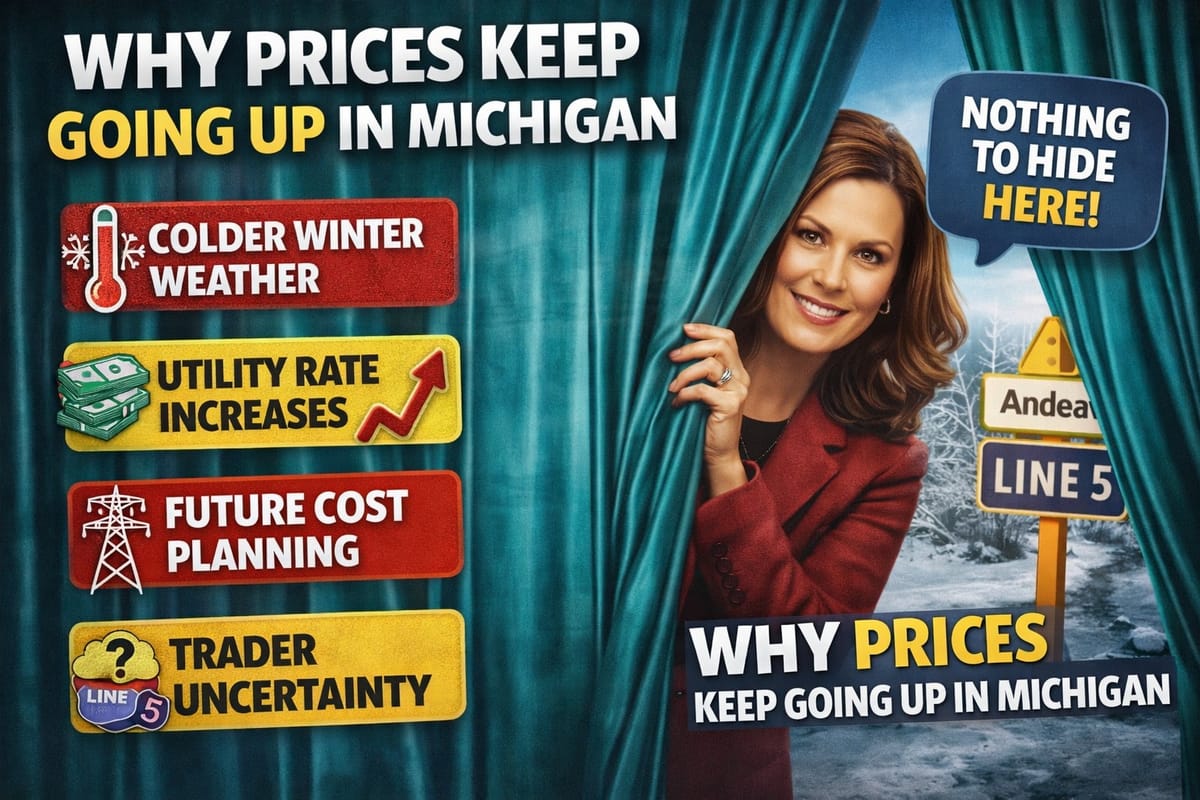
Winter Isn’t the Whole Story: Why Energy Bills Keep Rising Across Michigan
Energy companies say winter weather is the reason Michigan households are seeing higher energy bills. And yes, the cold played a role. But for Flint residents and others across the state, winter is only part of a much bigger picture.
Here is a realistic breakdown of what is driving higher energy bills in Michigan right now, using estimated percentages to show how the pieces fit together.
Cold weather and higher usage: about 45%
December brought extreme cold, and January delivered some of the coldest temperatures Michigan has seen in years. Furnaces ran longer. Backup electric systems kicked in. Gas and electricity usage spiked. That alone was enough to push bills higher, even without any rate changes.
But that is not the whole story.
State-approved rate increases: about 30%
Over the past two to three years, Michigan regulators approved multiple rate increases for utilities serving the state. Those increases raised the baseline cost before winter even arrived. So when usage jumped during the cold snaps, customers were already paying higher rates per unit than they were a few years ago.
That means a cold winter hit on top of already higher prices, not on top of old ones.
Future-cost planning and risk buffering: about 15%
Utilities do not just charge for today’s energy. They build rates around what they expect to spend tomorrow. Grid upgrades, system hardening, capacity planning, and large future demand are all baked into rate requests.
Michigan is also positioning itself for heavier electricity demand in the coming years, including large industrial and data-driven users. Planning for that future costs money now, and those costs are spread across current customers.
Market uncertainty and pipeline politics: about 10%
Energy markets react to uncertainty, not just shortages. The ongoing appeal involving the Line 5 pipeline has added long-term uncertainty to Michigan’s energy outlook. Even though the pipeline continues operating, legal and political instability creates risk.
Traders price risk. Utilities hedge against uncertainty. Those costs do not show up as a single line item on your bill, but they influence the environment utilities operate in and the prices they seek approval for.
Why bills rose even after mild fall weather
October and parts of November were relatively mild. That did not matter once December and January hit hard. Bills are driven by billing cycles, not seasons as a whole. When cold weather aligns with higher rates and built-in future costs, the result feels sudden and steep.
Bottom line for Michigan residents
Winter mattered. But it was not the only factor, and it was not acting alone. Higher usage collided with state-approved rate increases, long-term cost planning, and market uncertainty tied to Michigan’s energy future.
For households in Flint and across the state, this winter’s bills are the result of multiple pressures stacking at the same time. The cold may have triggered the spike, but the foundation for higher prices was already in place




Comments ()