Trump Says Supreme Court Tariff Ruling Makes Him Stronger, Not Weaker
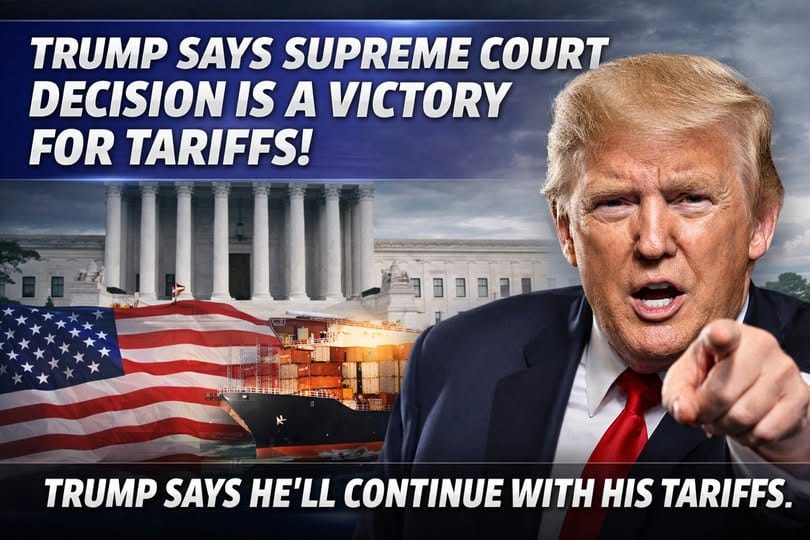
President Donald Trump said today that the Supreme Court decision limiting one tariff authority does not stop his trade agenda. Instead, he said it pushes his administration toward other laws that allow stronger tariffs, clearer authority, and more revenue. He made clear he is not backing off tariffs, but changing how they are imposed.
Before income taxes ever existed, the United States largely ran on tariffs. Congress passed the Tariff Act of 1789 shortly after the Constitution was ratified, and President George Washington signed it on July 4, 1789. Treasury Secretary Alexander Hamilton expanded on that approach in his 1791 Report on Manufactures, arguing that tariffs should fund the government and protect American industry. From 1789 until 1913, tariffs were the federal government’s primary revenue source, accounting for most federal income in many years, with no permanent income tax until the 16th Amendment took effect in 1913.
Trump said the Court did not strike down tariffs themselves and only blocked one specific use of AIPA to charge tariff fees. He said that under that law he can still block trade, restrict imports, license foreign goods, or impose embargoes, but cannot charge even a one dollar fee under that statute. He said he disagrees with the ruling but respects it and considers it final.
Trump said the administration will now rely on other tariff authorities that were left intact and explicitly recognized by the Court. He pointed to Section 232 national security tariffs, Section 301 tariffs related to unfair trade practices, and Section 122 authority for broad global tariffs. He said these tools are legally stronger, harder to challenge, and could ultimately bring in more money than the tariffs the Court rejected.
Trump said all existing tariffs remain in place and announced a new 10 percent global tariff under Section 122, effective immediately. He said additional tariffs will follow after new investigations, particularly against countries he says have treated the United States unfairly. He also said countries that have been cooperative will face lower or more favorable treatment.
Trump argued the ruling removes uncertainty rather than creating it. He said tariffs are now on firmer legal ground because multiple statutes clearly authorize them. He added that the decision does not weaken presidential power over trade and may expand it, calling tariffs a central tool for protecting American industry, reducing trade deficits, and shifting the financial burden away from U.S. workers and onto foreign producers.
Do you think this ruling strengthens Trump’s hand by forcing a broader tariff strategy, or does it raise new questions about how far a president should be able to go on trade without Congress?
Comments ()