

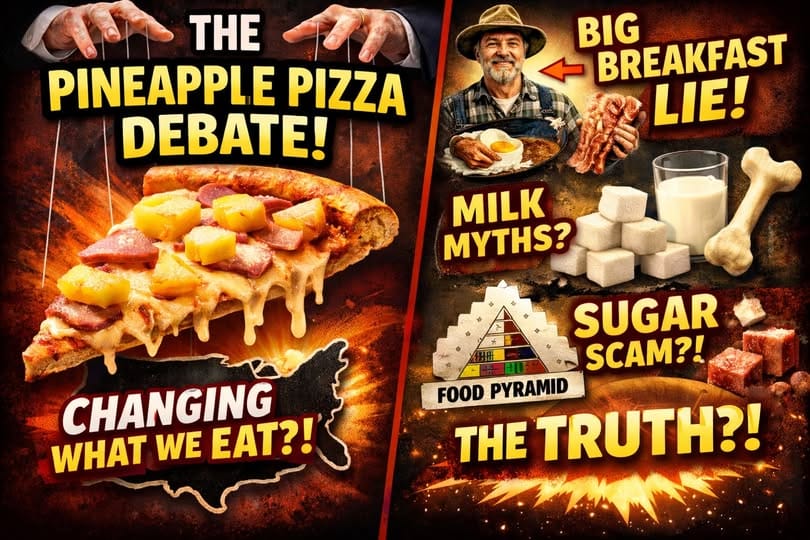
The Pineapple on Pizza Debate and the Invisible Hand of Marketing Behind It and Five Other Food Myths That Changed How America Eats
Pineapple had been on pizza quietly for decades before anyone pretended it was controversial. Hawaiian pizza dates back to the early 1960s and for most of its existence it was just another menu option, neither loved nor hated enough to matter. The real outrage did not surface until much later, when internet culture and modern marketing rewarded arguments more than agreement. At that point, the debate itself became valuable. Whether coordinated or simply exploited, pizza brands and industry groups benefited from keeping pizza constantly in the public conversation. A harmless food disagreement became a cultural signal, helping pizza maintain relevance and market share without changing the product at all.
The Farmer’s Breakfast Myth
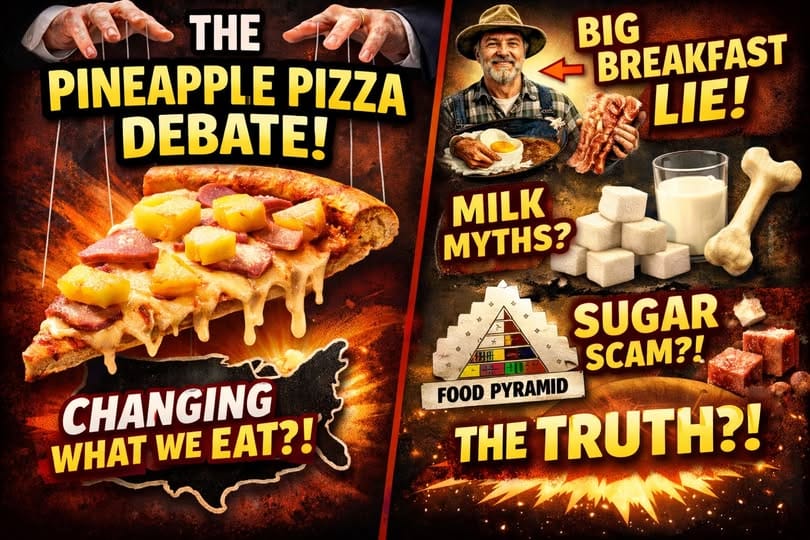
For most of American history, farmers did not eat bacon, eggs, or steak at dawn. They worked first and ate later, often not until midday, carrying simple food in a pocket or handkerchief. Pork and egg producers reframed heavy breakfasts as traditional and masculine, even using farmers as symbols of a meal they did not actually eat. Over time, repetition replaced memory, and the marketing image became accepted as historical fact.
Sugar as Everyday Energy
Sugar was once a luxury, not a staple. As production increased and prices dropped, marketing repositioned sugar as fuel, comfort, and happiness, especially for children. Sweet cereals, snacks, and drinks were presented as normal daily foods rather than occasional treats. Sugar did not need to be chosen anymore because it was quietly added to everything.
Milk Makes the Body Strong
Milk was marketed as essential for growth and bone strength across the entire population. Advertising emphasized calcium while ignoring lactose intolerance and alternative nutrient sources. School programs and institutional messaging reinforced the idea until milk was viewed as a requirement rather than an option.
Low Fat Means Healthy
When fat became the enemy, food companies removed it and replaced it with sugar and starch. Products were branded as healthier while calories stayed the same or increased. The label mattered more than the ingredients, and an entire generation learned to fear fat while consuming more sugar than ever.
Snacking Is Necessary
Hunger was rebranded as a problem that needed immediate solving. Snack food marketing normalized constant eating between meals, turning food into something consumed all day instead of at set times. Consumption increased without people realizing they were eating more overall.
Bonus The Original Food Pyramid
The original food pyramid presented grains as the foundation of a healthy diet, placing bread, cereal, rice, and pasta at the bottom while fats and proteins were pushed to the top. While framed as nutrition guidance, it aligned closely with agricultural production and surplus grain interests. The visual authority of a government backed chart turned marketing priorities into perceived science, shaping school lunches and home cooking for decades before later revisions quietly walked it back.
None of these shifts required force. They required repetition, authority, and time. Pineapple on pizza may seem trivial, but it follows the same pattern as breakfast myths, sugar habits, and snack culture. Marketing did not just sell food. It taught Americans what felt normal.
So when you take a strong position on a slice of pizza, are you making a personal choice, or repeating a belief that was carefully taught over time?





Comments ()