

Shrinkflation Payback? Why “Lower Prices” Still Mean Less Food for Your Money
Snack makers are talking about price cuts again, but shrinkflation is the part nobody wants to say out loud.
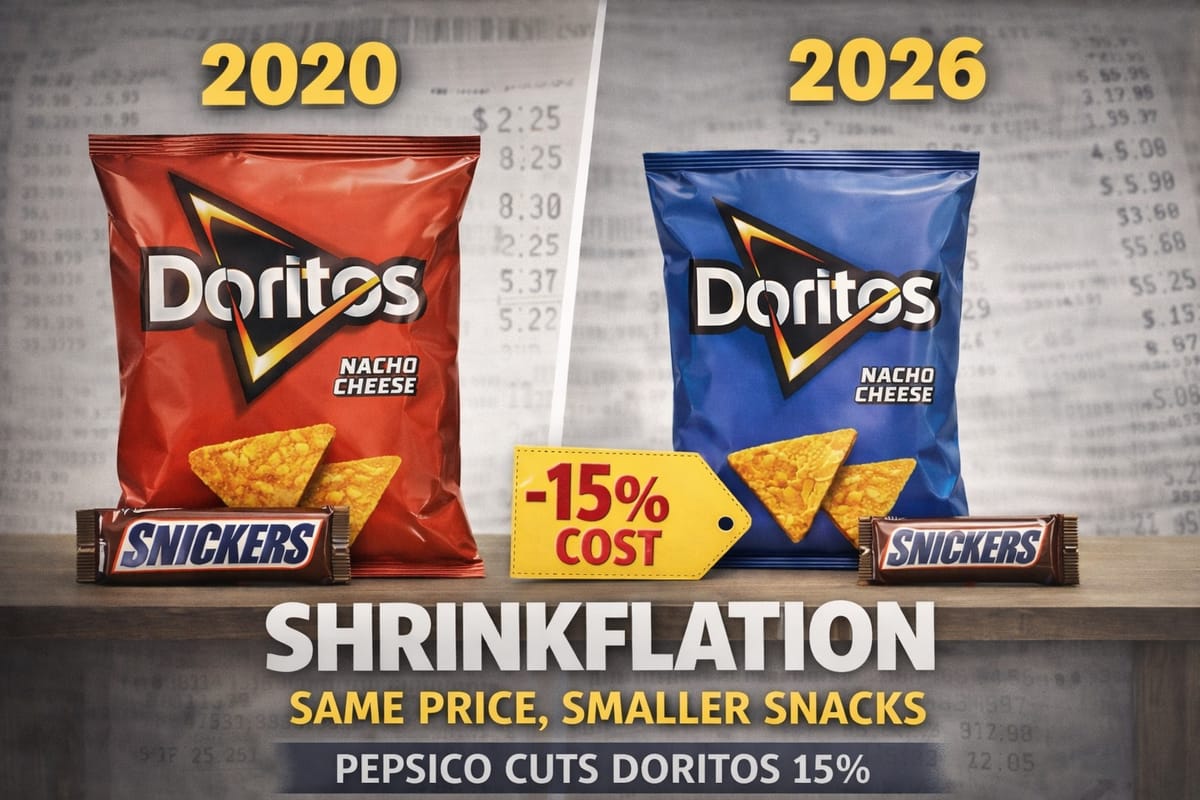
PepsiCo says it is lowering suggested prices on popular items like Doritos. That sounds like relief. Until you compare what people were actually buying before 2020 to what is on shelves now.
Take Doritos Family or Party Size.
In 2020, those large bags were commonly about 14.5 ounces. Today, many of those same big bags come in closer to 13 ounces. The bag looks the same. The branding looks the same. The price might even come down a little. But the product inside is smaller.
That means even if prices were rolled back to pre pandemic levels, PepsiCo would still be selling fewer chips per bag than it did before. Lower ingredient costs. Lower shipping weight. Same shelf price optics. Higher profit per ounce.
Now look at candy.
A standard Snickers bar today weighs about 1.86 ounces. Older versions were noticeably larger. So when shoppers pay the same or more for a bar that weighs less, that is shrinkflation doing the work long before any “price cut” headline shows up.
Then there is soda.
A 2 liter bottle of Pepsi did not shrink, but the price exploded. Before 2020, it was common to see a 2 liter around $1.50 to $2.00. Today, many stores are charging $3 or more. Even if prices ease slightly, they are easing from a much higher baseline than where they started.

Comments ()