President Trump Threatens to Block Gordie Howe Bridge. It Would Hurt Michigan’s Economy.
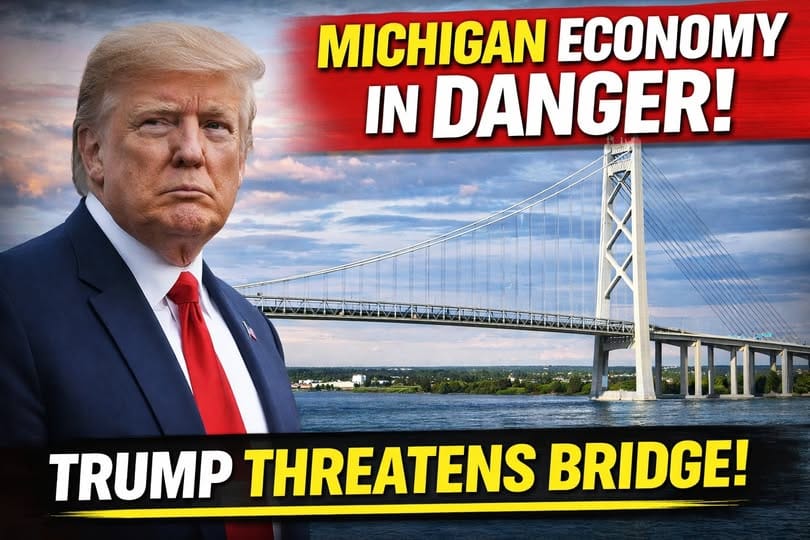
President Donald Trump has threatened to block or delay the opening of the Gordie Howe International Bridge unless Canada agrees to broader trade concessions, a move that would directly harm Michigan’s economy. The bridge, scheduled to open in 2026 between Detroit and Windsor, is a critical trade artery built under a binding U.S.–Canada agreement that already provides Michigan with future toll revenue, and delaying it would disrupt one of the busiest commercial corridors in North America.
The Gordie Howe bridge was designed to relieve congestion at the Ambassador Bridge and keep goods moving efficiently between Michigan and Canada, especially for the auto industry and manufacturing supply chains that depend on constant, timed cross-border shipments. Canada paid the upfront construction costs to get the project built, with toll revenue structured to repay that investment before proceeds are shared with Michigan. For years, state leaders and business groups have promoted the bridge as essential infrastructure for jobs, logistics, and long-term economic stability.
President Trump has argued the United States has been treated unfairly in trade with Canada and has suggested using federal authority tied to presidential permits and trade policy to prevent the bridge from opening as leverage. While supporters frame this as a negotiating tactic, the bridge itself is governed by existing international agreements, and stopping it would immediately affect commerce regardless of the outcome of broader trade talks.
What this means for Michigan’s economy
Michigan trades more with Canada than any other state, and the Detroit–Windsor corridor handles billions of dollars in goods every year. Blocking or delaying the bridge would slow freight movement, raise shipping and production costs, and disrupt just-in-time manufacturing, particularly in the auto sector. Those disruptions translate into higher costs for businesses, increased prices, and job impacts across southeast Michigan.
What this means for workers and businesses
Manufacturers, suppliers, and logistics companies rely on predictable border crossings to operate efficiently. Any interruption forces rerouted traffic, longer wait times, and uncertainty that businesses factor directly into investment and hiring decisions. Business groups warn that undermining a nearly completed bridge sends a negative signal to companies deciding where to expand or locate operations.
What Michigan leaders are saying
Gov. Gretchen Whitmer and multiple Michigan business organizations say blocking the bridge would damage the state’s economy and undermine years of planning and investment. They argue Michigan already benefits financially under the current agreement and that using the bridge as leverage risks real economic losses without guaranteeing better trade terms.
With construction nearly complete and Michigan’s trade relationship with Canada at stake, the economic consequences are clear.
Should Michigan’s economy be used as leverage in international trade disputes, or should the bridge open as planned to protect jobs and commerce?