Gov. Whitmer Signs Law Limiting Cell Phone Use During Class in Michigan Schools
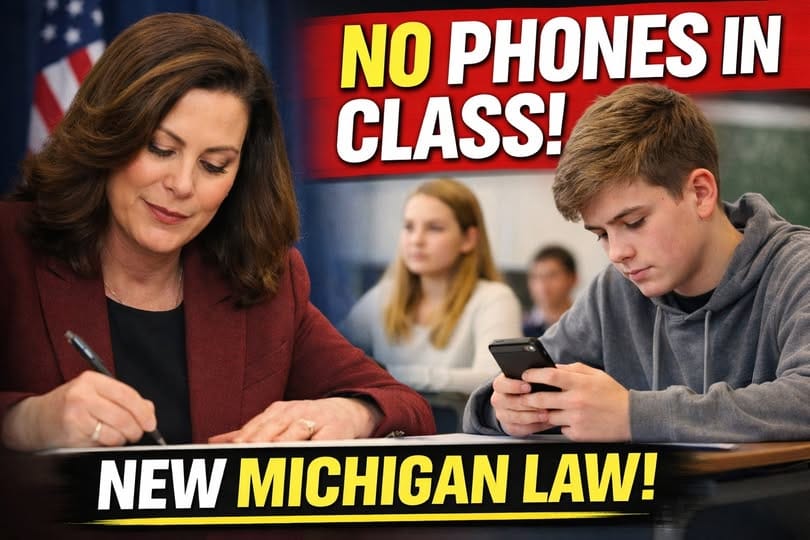
Gov. Gretchen Whitmer signed a bipartisan package of bills on February 10, 2026 that sets a statewide minimum rule for cell phone use in Michigan public schools. Beginning with the 2026–27 school year, students will no longer be allowed to use cell phones during instructional time in classrooms, though phones are not banned from school entirely.
The law applies to all public K–12 school districts and charter schools and requires each one to adopt, enforce, and publicly post a policy limiting classroom phone use. The bills passed with overwhelming bipartisan support in both the Michigan House and Senate, with large majorities of Republicans and Democrats voting in favor.
The legislation does not create a one-size-fits-all enforcement plan. Instead, it sets a baseline rule and leaves districts free to decide how phones are handled in practice, including storage, discipline, and whether to adopt stricter limits beyond classroom time. The law also includes specific exemptions for medical needs, special education accommodations, district-owned instructional devices, teacher-approved lesson use, and emergencies. A related bill requires schools to update their emergency plans to clearly explain when and how students may use phones during an emergency.
What this means for students
Students can still bring phones to school, but they will not be allowed to use them during class unless an exemption applies. That includes situations such as medical monitoring, IEP or 504 accommodations, or a teacher specifically allowing phone use for a lesson. Outside of instructional time, such as lunch or passing time, phone use will depend on local district rules. The law also distinguishes smartphones from basic phones that do not access apps or the internet, which are treated differently under the definition.
What this means for parents
Parents should expect clearer, written policies from their local schools explaining exactly when phones are allowed and how violations are handled. Districts are required to post those policies publicly. The law keeps phones available for emergencies but ties their use to each school’s emergency operations plan, meaning students may not automatically be allowed to use phones in every emergency situation. Supporters say the goal is consistency across schools while still allowing districts to tailor details locally.
What this means for teachers and schools
Teachers will be expected to enforce classroom phone restrictions as part of district policy, but the law also gives them limited discretion to allow phone use for specific instructional purposes. Schools must spell out enforcement methods ahead of time rather than handling phone issues informally. Education groups and teachers quoted in Michigan media have said phones are a frequent classroom distraction, while also noting the importance of clear rules and administrative support.
The law’s supporters say it is aimed at reducing distractions and improving focus during instruction, not removing phones from students’ lives altogether. Districts now have more than a year to draft policies, communicate expectations, and decide whether to go beyond the state minimum before the law takes effect.
Do you think limiting cell phone use only during class time is the right balance, or should Michigan schools adopt stricter rules?