

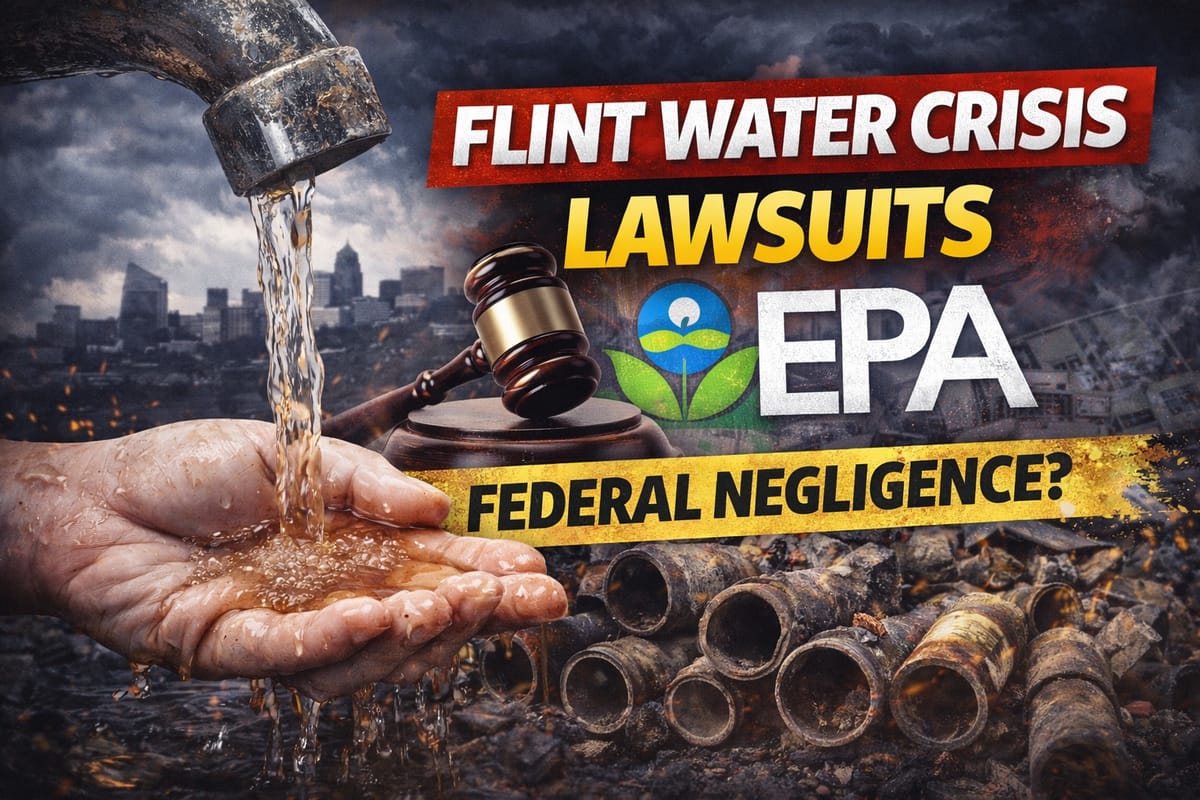
Flint Water Crisis Fallout Still Haunts the City as Lawsuits Move Forward
Nearly a decade after Flint’s water crisis first came to light, the fallout is far from over. Despite years of pipe replacements, testing, and remediation efforts, many residents say the damage goes deeper than infrastructure and cannot be fixed with construction alone.
Several lawsuits tied to the crisis are still advancing, including claims that federal agencies failed to act when warning signs were clear. At the center of those cases is the Environmental Protection Agency, which plaintiffs argue did not step in aggressively enough as lead-contaminated water flowed into Flint homes.
Residents say the issue is not only about past exposure but about long-term health effects, unanswered questions, and a deep erosion of trust. Many families still worry about lead’s impact on children who are now teenagers or young adults, while others say they no longer believe official assurances that the water is safe.
Legal experts note that these cases are about accountability as much as compensation. Plaintiffs are seeking acknowledgment that failures at multiple levels of government contributed to years of harm in a city that was already struggling.
For Flint, the water crisis is no longer just a public health emergency. It has become a lasting symbol of government failure, broken promises, and mistrust that continues to shape how residents view officials, regulators, and future assurances.
As the courts sort through responsibility, one thing remains clear in Flint. The crisis may no longer dominate headlines, but it has never truly ended for the people who lived through it.





Comments ()