Flint Sit-Down Strike Ends on This Date in 1937. Today Marks 89 Years.
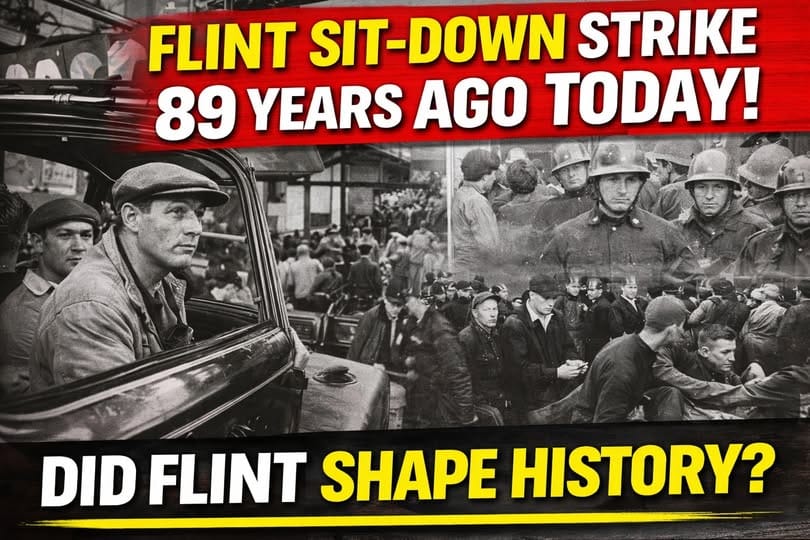
Today, February 11, marks the 89th anniversary of the end of the Flint sit-down strike, the 44-day labor action that ended on February 11, 1937 and permanently changed Flint, General Motors, and the American labor movement. What began inside GM plants in late December 1936 ended on this date when General Motors agreed to recognize the United Auto Workers, a decision that reshaped worker rights in Flint and helped set the direction of industrial labor across the country.
The sit-down strike was different from anything seen before. Instead of walking out, workers stayed inside the factories, occupying the production floors and shutting down operations from within. The strike centered on GM’s Fisher Body plants in Flint and quickly drew national attention as production stalled at one of the country’s most powerful corporations. Police attempts to remove workers failed, and tensions peaked during violent clashes in January 1937.
Michigan Governor Frank Murphy ultimately refused to deploy the National Guard to remove the strikers, a decision widely credited with preventing bloodshed and allowing negotiations to continue. On February 11, 1937, General Motors formally recognized the United Auto Workers as the bargaining representative for its employees, turning the UAW into a major national force almost overnight.
For Flint, the strike cemented the city’s role in labor history. The agreement reached here fueled rapid unionization across the auto industry and shifted the balance of power between workers and large manufacturers nationwide. While sit-down strikes were later ruled illegal, the impact of Flint’s strike remains a defining chapter in how labor relations evolved in the United States.
Eighty-nine years later, the date still matters because decisions made inside Flint factories changed how millions of American workers would negotiate wages, safety, and job security for generations.
Does Flint get enough credit today for shaping labor history in America, or has this chapter faded too far into the past?