

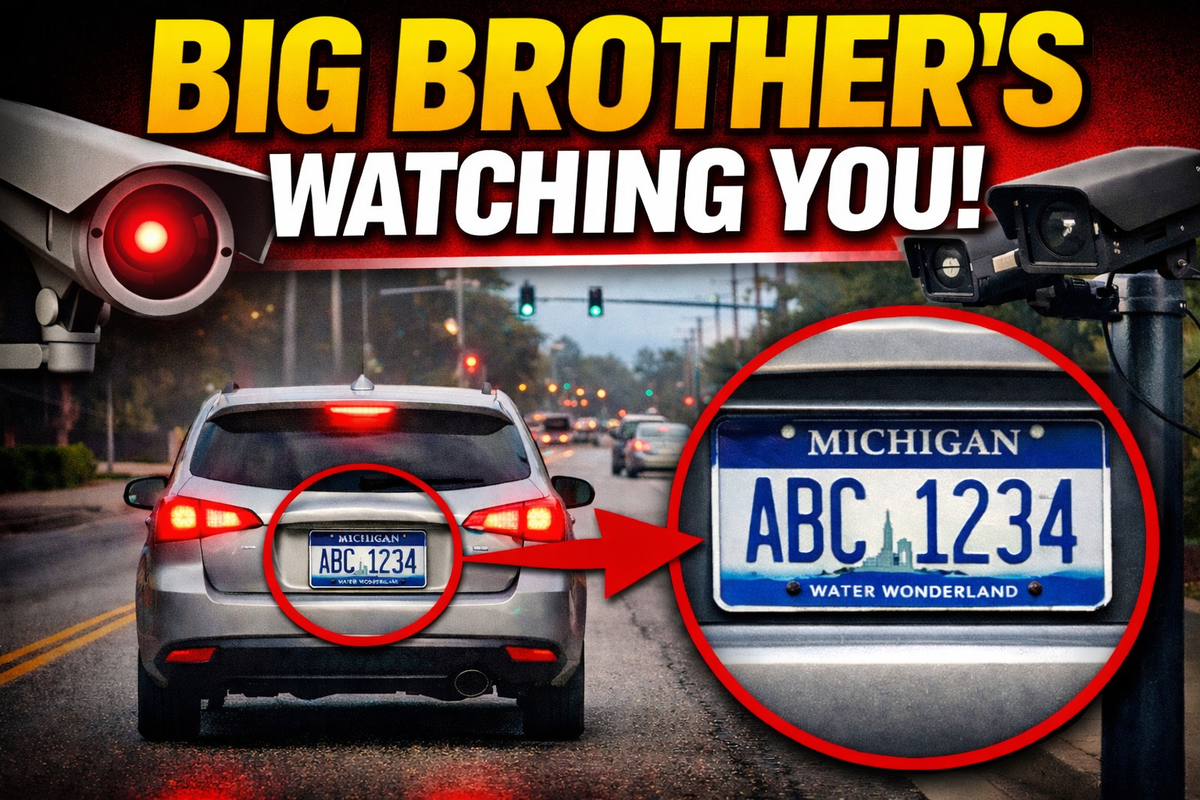
Do We Really Need Big Brother Watching Us Drive Down the Road?
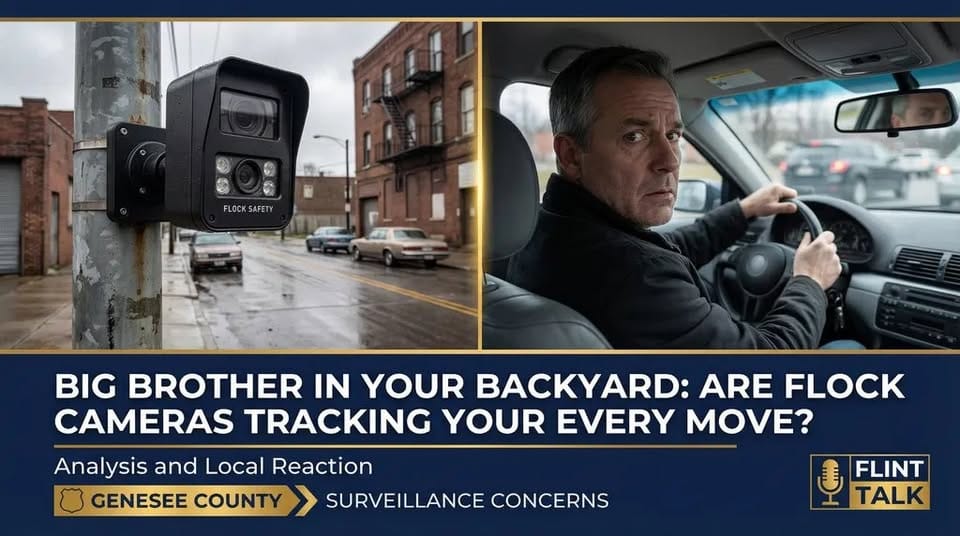
Do we really need Big Brother watching us drive down the road in Genesee County? That is the question hanging over the Genesee County Board of Commissioners as they have postponed a decision on whether to continue using Flock license plate reader cameras. These cameras are not just tools that activate during a crime. They operate constantly, quietly logging where vehicles go, when they pass, and how often they appear, creating travel histories for everyday residents who are not suspected of doing anything wrong.
Flock cameras automatically capture license plates, time, location, and vehicle characteristics such as make, model, and color. That information is uploaded to a private company’s cloud system and can be searched later. While supporters point to stolen vehicle recoveries, critics are asking a different question. Once this data exists, who controls it, who accesses it, and how is it really being used?
One major concern is that these systems are often installed, maintained, or configured by civilian contractors rather than sworn law enforcement. That opens the door to misconfigured cameras, overly broad access permissions, weak account oversight, and poor audit trails. When non law enforcement personnel handle camera placement, system settings, or even data access, it creates real risks around privacy, accountability, and evidence handling. If data is later used in an investigation, defense attorneys can challenge whether the evidence was properly handled or whether settings were changed after the fact.
There are also documented cases across the country where innocent people were treated as suspects simply because cameras showed them driving through the same area repeatedly. In some cases, people were questioned or accused because the route they took home, to work, or to a favorite business happened to pass through an area known for crime. Their normal routine was interpreted as suspicious because technology logged it over and over. In at least one well reported case, a woman had to prove her own innocence after license plate reader data was used to imply wrongdoing. In another, a veteran discovered hundreds of recorded sightings of his vehicle despite never being accused of a crime, prompting a lawsuit over mass surveillance.
This is where the “Big Brother” concern becomes real. When location data is collected on everyone, patterns can be misread, context can be ignored, and innocent behavior can be reframed as suspicious. Add in data sharing between agencies, unclear retention policies, and private vendors hosting the information, and the system can quietly expand far beyond what the public was initially told.
Another unresolved issue is public records access. Courts in other states have ruled that license plate reader data can be considered a public record, even if it is stored by a private vendor. That raises questions about whether this information could eventually be released through public records requests, exposing travel patterns of ordinary residents who never consented to being tracked.
The Board of Commissioners has delayed its decision, which gives residents a window to speak up. Whether you support or oppose the use of these cameras, this is a policy choice with long term consequences for privacy and civil liberties in Genesee County.
If you feel strongly about this issue, now is the time to contact the Genesee County Board of Commissioners and make your voice heard.
Board of Commissioners phone number:
(810) 257-3020
Board of Commissioners website:
https://www.geneseecountymi.gov/government/board_of_commissioners/
Do we really want a system that quietly watches where we drive every day, or do we want clearer limits, stronger oversight, and a public say before Big Brother becomes permanent in Genesee County?


Comments ()