

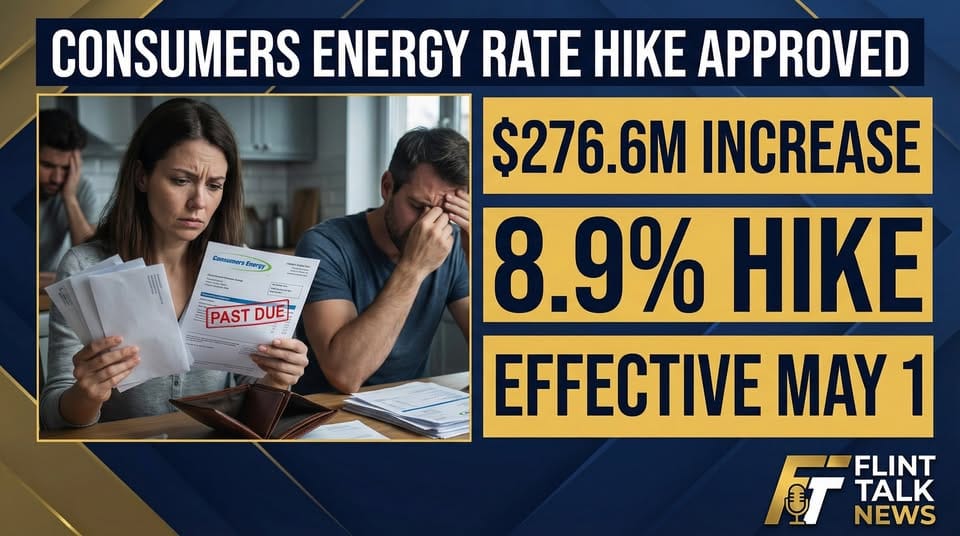
Consumers Energy Wins Massive Rate Hike: Michigan Families Face Monthly Increase
Michigan Public Service Commission Approves $276 Million Hike, Largest in Decades—And the Utility Already Plans Another Request
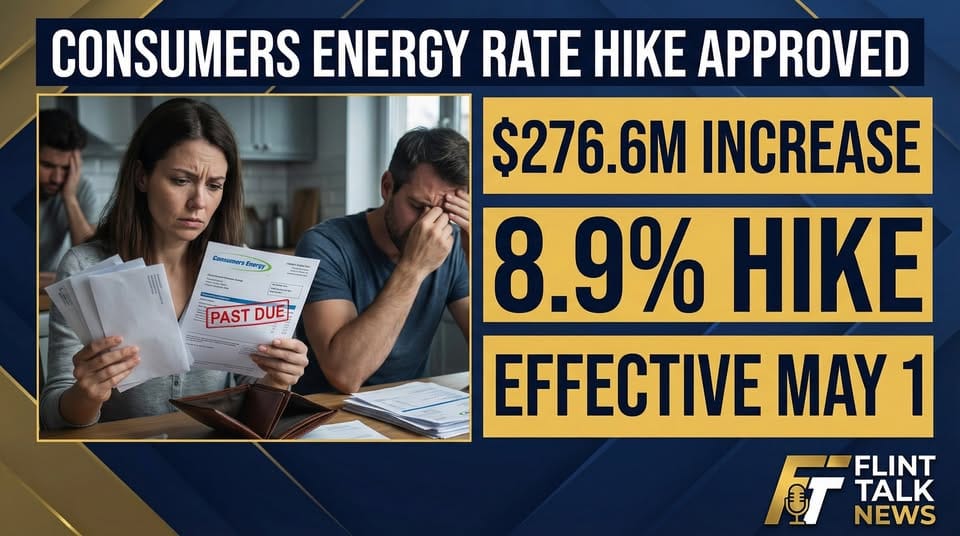
LANSING, MI - The Michigan Public Service Commission has approved a $276.6 million electric rate increase for Consumers Energy, marking the largest rate hike authorized by the state in at least two decades. The increase will take effect May 1, 2026, and will add an average of $6.46 to residential customers' monthly electric bills, translating to an 8.9 percent increase.
The approval affects approximately 1.8 million families and businesses across Michigan who rely on Consumers Energy for electricity. For the average household, this means an additional $77 per year in electric bills on top of what they already pay.
The Largest Hike in Decades
The $276.6 million increase is the largest electric rate hike authorized by the Michigan Public Service Commission since at least 2004, according to reports. It comes just one year after Consumers Energy received a $154 million rate increase in 2025, raising questions about the utility's spending practices and the state's regulatory oversight.
The timing is particularly troubling for Michigan residents who are already struggling with rising costs of living. The rate hike will hit low-income families and seniors on fixed incomes especially hard, as electricity is a necessity that cannot be cut from household budgets.
What Consumers Energy Says
Consumers Energy argues that the rate increase is necessary to fund infrastructure improvements, including more aggressive tree trimming, replacing aging power poles, and enhancing grid technology. The utility claims these investments are essential for grid reliability and reducing power outages.
The company also points to increased costs for fuel, operations, and capital investments as justification for the hike. Consumers Energy executives argue that without the rate increase, the utility cannot maintain and upgrade the electrical grid to meet modern demands.
The Problem: Regulators Keep Approving
The real issue is not whether Consumers Energy needs to invest in infrastructure. The problem is that the Michigan Public Service Commission continues to approve massive rate increases with minimal scrutiny of the utility's spending practices and efficiency.
Consumers Energy has a history of requesting rate increases and having them approved. The company requested a $423 million increase, and the MPSC approved $276.6 million. While this represents a reduction from the requested amount, it is still a massive increase that will burden Michigan families.
More troubling is that Consumers Energy has already indicated it plans to request another rate increase in June 2026—just one month after this massive hike takes effect. This suggests a pattern of continuous rate increases that will only accelerate the burden on Michigan families.
The Regulatory Failure
The Michigan Public Service Commission is supposed to protect consumers while ensuring utilities can operate responsibly. Instead, the MPSC has become a rubber stamp for Consumers Energy's rate increase requests.
The commission has approved two massive rate increases in consecutive years without adequately questioning whether the utility is operating efficiently or whether the requested increases are truly necessary. There is no evidence that the MPSC has conducted a thorough audit of Consumers Energy's spending or compared the utility's efficiency to other utilities in the region.
Additionally, the MPSC has not addressed the fundamental question: Why should Michigan families bear the cost of infrastructure improvements through rate increases when other states have found ways to fund grid modernization without burdening consumers?
Impact on Michigan Families
For a family already struggling to pay their bills, an additional $77 per year in electric costs is significant. For seniors on fixed incomes, the increase could force difficult choices between paying for electricity and paying for food or medicine.
Low-income families will be hit hardest, as they spend a larger percentage of their household income on utilities. The rate increase will disproportionately affect the most vulnerable Michiganders.
What Happens Next
The rate increase takes effect May 1, 2026. Michigan families should expect to see the increase reflected in their electric bills starting that month. The utility has already signaled that another rate increase request is coming in June, suggesting that this cycle of continuous rate hikes will continue.
Michigan residents and policymakers should demand that the Public Service Commission conduct a thorough review of Consumers Energy's spending practices and efficiency before approving any future rate increases. The current approach of rubber-stamping utility requests is unsustainable and unfair to Michigan families.
For now, Michigan families should prepare for higher electric bills starting in May.



Comments ()